
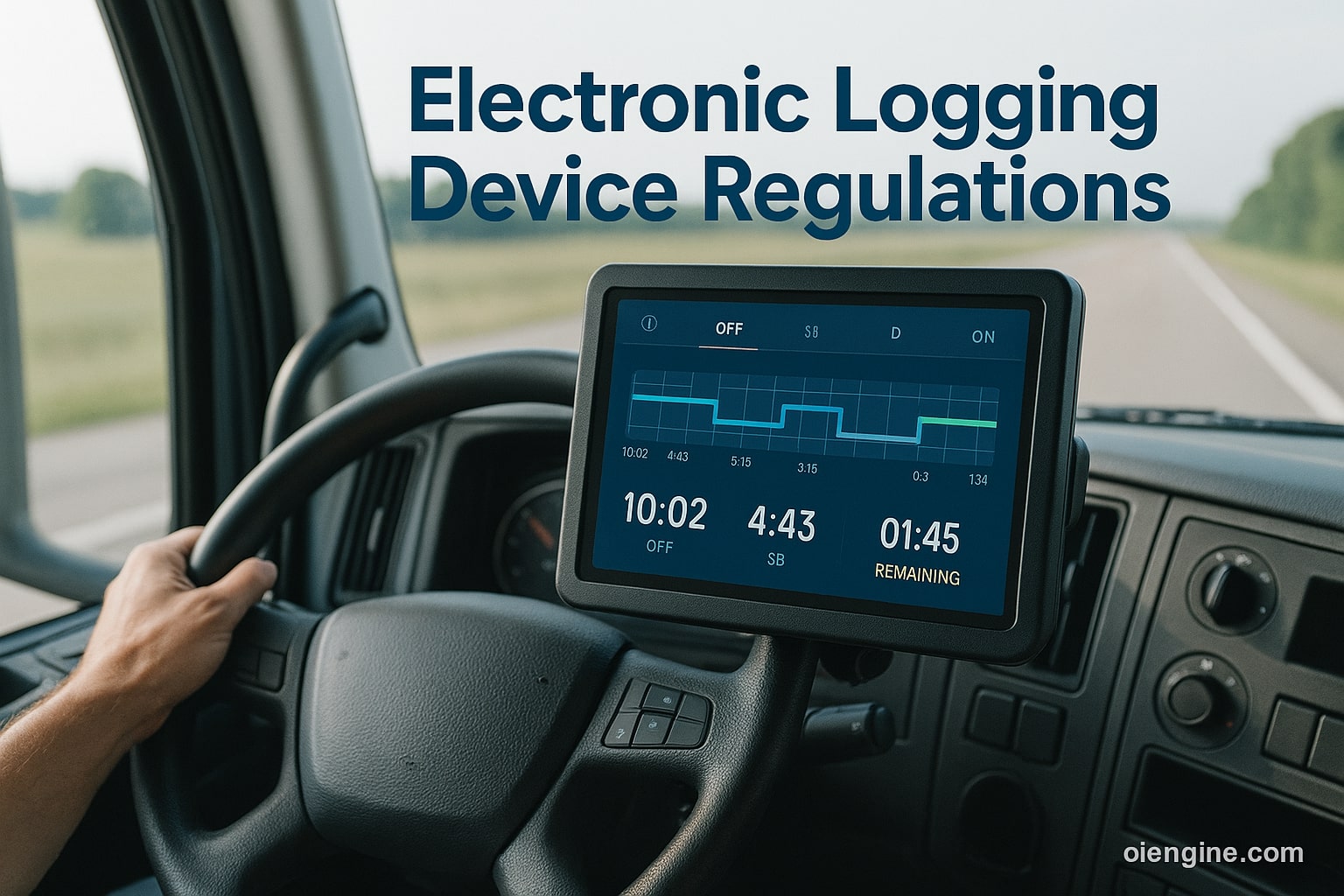
The trucking industry stands at a pivotal crossroads where traditional paper logbooks meet cutting-edge digital compliance. Electronic logging devices (ELDs) have transformed how drivers track hours, manage compliance, and optimize operations. This shift isn’t just about meeting federal mandates, it’s about unlocking powerful advantages that boost safety, efficiency, and profitability.
Since the FMCSA mandate took full effect in December 2019, ELDs have proven their worth far beyond basic compliance. These devices deliver measurable benefits across four critical areas: regulatory compliance, operational safety, time and cost savings, and enhanced fleet management capabilities. Understanding these advantages of electronic logging devices helps fleet managers and owner-operators make informed decisions about implementation.
This comprehensive guide explores how ELDs transform trucking operations, from reducing violations to maximizing return on investment. You’ll discover the financial advantages, operational improvements, and future opportunities that make ELDs essential tools for competitive fleet management in 2026.
Table of Contents
- What Are Electronic Logging Devices and Why Do They Matter?
- Top Benefits of ELDs in the Trucking Industry
- Financial Advantages of Electronic Logging Devices for Truck Drivers
- How ELDs Transform Fleet Management Operations?
- Common Misconceptions About ELDs in Trucking
- Step-by-Step Guide to Maximizing ELD Benefits
- ELD Exemptions and Special Considerations
- Future of ELDs in the Trucking Industry
- Frequently Asked Questions About ELD Benefits
- Conclusion
What Are Electronic Logging Devices and Why Do They Matter?
Electronic logging devices represent a fundamental shift in how the trucking industry manages Hours of Service (HOS) compliance. These sophisticated tools automatically record driving time, vehicle movement, and critical operational data directly from the vehicle’s engine. Unlike traditional paper logs, ELDs provide tamper-resistant, real-time tracking that benefits drivers, fleet managers, and regulatory authorities alike.
Understanding ELD Technology and Components
Modern ELD systems consist of three essential components working in harmony. The hardware device connects directly to the vehicle’s engine control module (ECM), capturing data on engine status, vehicle movement, and operational metrics. A mobile application allows drivers to manage their duty status, review logs, and complete daily tasks. Finally, fleet management software aggregates this data, providing managers with comprehensive insights into compliance, safety, and operational efficiency.
The technology records crucial information including date, time, location, engine hours, vehicle miles, and driver identification. This automated data collection eliminates manual entry errors and provides an indisputable record of driver activity. The system’s integration with GPS technology enables real-time location tracking, helping dispatchers optimize routes and improve customer service.
The Shift from Paper Logs to Digital Compliance
The transition from paper logbooks to electronic logging devices for truck drivers marks a significant evolution in industry practices. Paper logs, prone to errors and manipulation, created compliance challenges and safety risks. Drivers spent valuable time manually calculating hours, often leading to mistakes that resulted in violations or unsafe driving conditions.
Digital compliance through ELDs eliminates these issues by automating the entire process. The system automatically switches to driving mode when the vehicle moves, tracks rest periods accurately, and alerts drivers before they exceed legal limits. This automation reduces paperwork burden by up to 20 hours per month for many drivers, allowing them to focus on safe, efficient operation.
Key Features Every ELD Must Include
FMCSA-compliant ELDs must meet specific technical requirements to ensure consistency and reliability. Essential features include automatic driving time recording, tamper-resistant design, and standardized data transfer capabilities. The device must support multiple data transfer methods including USB 2.0, Bluetooth, and wireless web services for roadside inspections.
Modern ELDs go beyond basic compliance requirements, offering advanced features that multiply their value. These include real-time alerts for HOS violations, integrated driver vehicle inspection reports (DVIR), and fuel efficiency monitoring. Many systems also provide driver scorecards, helping identify coaching opportunities and recognize top performers.
Top Benefits of ELDs in the Trucking Industry
The benefits of ELDs in trucking extend far beyond simple regulatory compliance. These powerful tools deliver advantages across multiple operational areas, creating value for drivers, fleet managers, and business owners. Understanding these benefits helps justify the investment and maximize the return from ELD implementation.
Compliance Benefits: Staying Legal and Avoiding Violations
ELDs virtually eliminate the risk of HOS violations through automated tracking and real-time alerts. The system prevents drivers from exceeding daily or weekly driving limits by providing countdown timers and advance warnings. This proactive approach to compliance reduces violation rates by up to 50% compared to paper logs.
Fleet managers gain unprecedented visibility into compliance status across their entire operation. Dashboard views show which drivers are approaching limits, allowing dispatchers to plan accordingly. The standardized data format also speeds roadside inspections, reducing downtime from an average of 23 minutes to just 5 minutes.
Compliance improvements directly impact a fleet’s Compliance, Safety, Accountability (CSA) scores. Better scores lead to fewer DOT audits, reduced insurance premiums, and improved business opportunities with safety-conscious shippers.
Safety Improvements for Drivers and Fleet Operations
Driver fatigue remains a leading cause of trucking accidents, making HOS compliance critical for safety. ELDs enforce mandatory rest periods, ensuring drivers get adequate sleep between shifts. The devices track actual driving time rather than estimates, preventing the accumulation of fatigue from unreported hours.
Real-time monitoring capabilities enable fleet managers to identify risky driving behaviors immediately. Speeding, harsh braking, and rapid acceleration trigger alerts, allowing for timely intervention. This proactive safety management reduces accident rates by an average of 22% according to industry studies.
The safety benefits extend beyond individual drivers to overall fleet operations. Improved compliance reduces liability exposure, while better safety records lead to lower insurance costs and enhanced company reputation.
Time and Administrative Cost Savings
ELDs deliver substantial time savings by eliminating manual logbook management. Drivers save an average of 15 minutes daily on paperwork, translating to over 60 hours annually. This recovered time increases productive driving hours and improves driver satisfaction.
Back-office operations experience even greater efficiency gains. Automated data collection eliminates manual log auditing, reducing administrative workload by up to 30%. Staff can focus on value-added activities rather than paperwork processing and error correction.
The time savings compound when integrated with comprehensive fleet tracking systems, creating synergies across operational functions. Automated reporting, simplified compliance management, and streamlined communication all contribute to reduced operational costs.
Real-Time Fleet Management Capabilities
Modern ELDs serve as the foundation for sophisticated fleet management systems. Real-time GPS tracking enables precise vehicle location monitoring, helping dispatchers optimize routes and respond to customer inquiries instantly. This visibility improves on-time delivery rates and enhances customer satisfaction.
The continuous data stream from ELDs provides insights into vehicle utilization and driver productivity. Managers can identify underutilized assets, optimize driver assignments, and improve overall fleet efficiency. Integration with dispatch software creates seamless workflows from order entry to delivery confirmation.
Advanced analytics capabilities transform raw data into actionable intelligence. Fleet managers can identify trends, predict maintenance needs, and optimize operations based on historical patterns and real-time conditions.
Enhanced Driver Protection and Fair Treatment
ELDs protect drivers from coercion and harassment by creating an indisputable record of driving time. The devices prevent dispatchers or shippers from pressuring drivers to violate HOS rules, as all parties can see the remaining available hours. This transparency fosters a culture of safety and compliance throughout the organization.
Accurate time tracking ensures drivers receive proper compensation for all working hours. The detailed records support fair pay practices and help resolve disputes quickly. Many drivers report improved job satisfaction after ELD implementation due to reduced paperwork and clearer expectations.
The devices also protect drivers during accident investigations by providing precise data about vehicle operation. This information can exonerate drivers from false claims and support their version of events.
Financial Advantages of Electronic Logging Devices for Truck Drivers
The financial benefits of implementing ELDs extend well beyond avoiding compliance violations. These devices deliver measurable returns through improved efficiency, reduced costs, and enhanced revenue opportunities. Understanding these financial advantages helps justify the investment and accelerate ROI realization.
Fuel Efficiency and Idle Time Reduction
Excessive idling consumes approximately one gallon of fuel per hour, representing a significant operational cost. ELDs monitor idle time precisely, enabling managers to identify problem areas and implement targeted solutions. Fleets typically reduce idle time by 15-20% within the first year of ELD implementation.
The devices also track speeding events, which directly impact fuel consumption. Maintaining optimal speeds improves fuel efficiency by up to 7%, translating to thousands of dollars in annual savings per vehicle. Real-time alerts help drivers maintain efficient driving habits consistently.
Integration with fuel card programs provides comprehensive fuel management capabilities. Managers can track fuel purchases, identify potential fraud, and optimize fueling strategies based on route planning and pricing data.
Increased Productivity and Drive Time Optimization
ELDs help maximize productive driving hours within HOS limits through precise time management. The elimination of paper log rounding practices (where drivers round to 15-minute increments) recovers an average of 15 minutes of drive time daily. This additional time translates to increased miles and revenue potential.
Automated duty status changes ensure drivers capture every available minute of driving time. The system switches between on-duty and driving status automatically, preventing lost time from manual status management. This optimization can increase annual mileage by 3-5% without extending work hours.
Better time management also improves driver utilization rates. Dispatchers can assign loads more efficiently when they have accurate, real-time data about driver availability and location.
Reduced Maintenance Costs Through Proactive Monitoring
ELDs integrated with vehicle diagnostics provide early warning of potential maintenance issues. The system monitors engine fault codes, alerting managers to problems before they cause breakdowns. This proactive approach reduces emergency repair costs by up to 25% and minimizes revenue-losing downtime.
Automated maintenance scheduling based on actual engine hours and mileage ensures timely service intervals. Proper maintenance extends vehicle life, improves fuel efficiency, and maintains warranty compliance. The detailed maintenance records also enhance resale values.
The diagnostic capabilities help identify chronic issues across the fleet. Managers can spot patterns indicating driver behavior problems or vehicle defects, enabling targeted interventions that prevent costly failures.
ROI Analysis: How ELDs Pay for Themselves
| ROI Factor | Small Fleet (1-10 trucks) | Medium Fleet (11-50 trucks) | Large Fleet (50+ trucks) |
| Violation Reduction | $500-$2,000/truck/year | $750-$3,000/truck/year | $1,000-$4,000/truck/year |
| Fuel Savings | $800-$1,500/truck/year | $1,000-$2,000/truck/year | $1,200-$2,500/truck/year |
| Time Savings | $1,200-$2,000/truck/year | $1,500-$2,500/truck/year | $1,800-$3,000/truck/year |
| Maintenance Savings | $400-$800/truck/year | $500-$1,000/truck/year | $600-$1,200/truck/year |
| Total Annual Savings | $2,900-$6,300/truck | $3,750-$8,500/truck | $4,600-$10,700/truck |
Most fleets recover their ELD investment within 6-12 months through these combined savings. The ongoing benefits continue to deliver value throughout the device lifecycle, making ELDs one of the highest ROI investments in trucking technology.
How ELDs Transform Fleet Management Operations?
ELDs serve as the cornerstone of modern fleet management systems, enabling capabilities that were impossible with traditional paper-based methods. The real-time data and automation features transform how managers oversee operations, make decisions, and optimize performance. These advanced capabilities position fleets for competitive advantage in an increasingly digital marketplace.
Real-Time GPS Tracking and Route Optimization
GPS-enabled ELDs provide continuous vehicle location updates, revolutionizing dispatch operations and customer service. Dispatchers can see exact vehicle positions, estimated arrival times, and route progress on interactive maps. This visibility enables proactive communication with customers about delivery status and potential delays.
Route optimization algorithms leverage historical ELD data to identify the most efficient paths. The system considers factors like traffic patterns, delivery windows, and driver hours availability. Optimized routing reduces miles driven by 5-10%, saving fuel costs and increasing delivery capacity.
Geofencing capabilities add another layer of operational control. Managers receive alerts when vehicles enter or exit designated areas, improving security and verifying service completion. This feature particularly benefits fleets serving specific regions or restricted facilities.
Automated IFTA Reporting and Tax Compliance
International Fuel Tax Agreement (IFTA) reporting becomes effortless with ELD automation. The devices track mileage by jurisdiction automatically, eliminating manual record-keeping and calculation errors. This precise tracking ensures accurate quarterly tax filings and reduces audit risks.
Integration with trucking bookkeeping software streamlines the entire tax compliance process. Automated data flows eliminate duplicate entry and reduce accounting workload by up to 40%. The detailed records support audit defense with comprehensive documentation.
State-specific requirements add complexity to fuel tax compliance, but ELDs handle these variations automatically. The system tracks border crossings, calculates jurisdiction-specific mileage, and generates reports formatted for each state’s requirements.
Vehicle Diagnostics and Preventive Maintenance
Modern ELDs connect directly to the vehicle’s diagnostic port, monitoring hundreds of engine parameters continuously. This real-time monitoring detects issues like low oil pressure, coolant temperature problems, or emission system faults immediately. Early detection prevents minor issues from becoming major repairs.
Predictive maintenance algorithms analyze diagnostic data patterns to forecast component failures. The system might identify a gradually declining battery voltage trend and recommend replacement before a breakdown occurs. This proactive approach reduces roadside breakdowns by up to 30%.
Maintenance scheduling becomes data-driven rather than calendar-based. The system tracks actual engine hours, mileage, and operating conditions to optimize service intervals. This approach prevents over-maintenance while ensuring critical services aren’t missed.
Driver Performance Monitoring and Coaching
ELDs in the trucking industry provide comprehensive driver behavior data that enables targeted coaching programs. The devices track metrics like hard braking, rapid acceleration, speeding, and excessive idling. Managers can identify drivers needing additional training or recognize top performers.
Key Performance Indicators Tracked by ELDs:
- Fuel efficiency scores
- Safety event frequency
- HOS compliance rates
- On-time delivery performance
- Vehicle inspection completion
- Idle time percentages
Gamification features in many ELD platforms motivate drivers through friendly competition. Leaderboards, achievement badges, and performance bonuses based on ELD data improve driver engagement. This positive reinforcement approach yields better results than punitive measures alone.
Common Misconceptions About ELDs in Trucking
Despite widespread adoption, several misconceptions about ELDs persist in the trucking community. Addressing these myths helps fleet managers and drivers understand the true value proposition of electronic logging devices. Clear, factual information enables better decision-making and smoother implementation processes.
“ELDs Are Just About Compliance” – The Hidden Benefits
While compliance drives initial ELD adoption, the devices deliver value far beyond regulatory requirements. Smart fleet operators leverage ELD data for competitive advantage through operational optimization. The compliance foundation enables advanced analytics, predictive maintenance, and performance management capabilities.
Revenue enhancement opportunities often surprise fleet managers new to ELD technology. Accurate time tracking supports detention charge documentation, improving collections by 15-20%. Precise mileage records enable better rate negotiations with data-backed cost justifications.
Customer service improvements represent another hidden benefit. Real-time tracking enables proactive delay notifications, accurate ETAs, and proof of delivery documentation. These capabilities strengthen customer relationships and support premium pricing for superior service.
“They’re Too Expensive for Small Fleets” – Cost Reality Check
Small fleet operators often overestimate ELD costs while underestimating benefits. Basic compliant devices start under $200, with monthly service fees comparable to a single cell phone plan. When compared to potential violation fines of $1,000-$5,000, the investment pays for itself by preventing just one violation.
Financing options and volume discounts make ELDs accessible to fleets of all sizes. Many providers offer lease programs with no upfront costs, allowing immediate implementation with positive cash flow from day one. Small fleets often see faster ROI due to greater efficiency improvements from baseline operations.
The cost of non-compliance far exceeds ELD investment. Beyond monetary fines, violations can trigger increased insurance rates, lost business opportunities, and damaged reputation. These indirect costs often dwarf the direct technology investment.
“ELDs Invade Driver Privacy” – Understanding the Facts
Privacy concerns stem from misunderstandings about what ELDs actually monitor. The devices track vehicle operation, not personal activities. When the vehicle is off, the ELD stops recording, preserving driver privacy during rest periods.
Personal conveyance provisions allow drivers to use commercial vehicles for personal reasons without counting against driving hours. Modern ELDs include easy personal conveyance selection, maintaining clear boundaries between work and personal time. This flexibility addresses most privacy concerns while maintaining compliance.
Data access controls ensure information remains confidential and secure. Only authorized personnel can view driver logs, and strict regulations govern data retention and sharing. Drivers maintain rights to their data and can request copies for personal records.
Step-by-Step Guide to Maximizing ELD Benefits
Successful ELD implementation requires more than simply installing devices. A strategic approach maximizes benefits while minimizing disruption to operations. This proven four-phase methodology helps fleets realize full value from their ELD investment quickly and efficiently.
Phase 1: Choosing the Right ELD Solution
Selecting an appropriate ELD begins with assessing specific fleet needs and operational requirements. Consider factors like fleet size, vehicle types, existing technology infrastructure, and growth plans. The right solution scales with your business while providing features that matter most to your operation.
Essential Selection Criteria:
- FMCSA registration and compliance certification
- Hardware reliability and warranty terms
- Software features and ease of use
- Integration capabilities with existing systems
- Customer support quality and availability
- Total cost of ownership including hidden fees
Request demos from multiple providers and involve drivers in the evaluation process. Their buy-in proves crucial for successful implementation. Test devices in various vehicles to ensure compatibility, especially with older equipment that may require specific adapter types.
Phase 2: Implementation Best Practices
Successful rollout begins with a detailed implementation plan addressing technical and human factors. Start with a pilot program involving 10-20% of your fleet to identify issues before full deployment. This approach allows refinements based on real-world experience without disrupting entire operations.
Create a phased deployment schedule that minimizes operational impact. Install devices during regular maintenance intervals or home time to avoid revenue loss. Establish clear procedures for device installation, testing, and driver training before beginning rollout.
Communication proves critical throughout implementation. Regular updates keep all stakeholders informed about progress, addressing concerns proactively. Celebrate early wins to build momentum and maintain positive attitudes toward the change.
Phase 3: Training Drivers for Success
Comprehensive driver training ensures smooth adoption and maximum benefit realization. Begin with the “why” behind ELD implementation, emphasizing benefits like reduced paperwork and fair treatment. Drivers who understand advantages become advocates rather than resistors.
Hands-on training sessions should cover daily operations, troubleshooting common issues, and mobile app navigation. Provide quick reference guides and video tutorials for ongoing support. Consider appointing driver champions who can assist peers with questions.
Address legal services for truckers regarding ELD compliance during training. Understanding their rights and protections under ELD regulations builds confidence and reduces resistance to the technology.
Phase 4: Leveraging Data for Continuous Improvement
Data analysis transforms ELD information into actionable insights driving operational improvements. Establish key performance indicators (KPIs) aligned with business objectives. Regular review of metrics identifies trends and improvement opportunities.
Monthly driver scorecards based on ELD data foster healthy competition and recognize top performers. Focus on positive reinforcement while providing coaching for improvement areas. Share fleet-wide successes to maintain momentum and engagement.
Integrate ELD data with other business systems for comprehensive operational visibility. Connection with dispatch software, maintenance systems, and accounting platforms multiplies value through process automation and enhanced decision-making capabilities.
ELD Exemptions and Special Considerations
While ELD requirements apply broadly across the trucking industry, several exemptions recognize unique operational circumstances. Understanding these exemptions helps fleets determine compliance requirements and avoid unnecessary technology investments. However, many exempt operations still benefit from voluntary ELD adoption for operational advantages.
Short-Haul Exemption Requirements
The short-haul exemption applies to drivers operating within specific parameters that reduce fatigue risks. Drivers must operate within a 150 air-mile radius from their normal work reporting location and return to that location within 14 hours. These operations typically involve local delivery, construction, or agricultural activities.
Time record requirements still apply under the short-haul exemption, though simplified compared to standard HOS logs. Employers must maintain accurate records showing time in, time out, and total hours for each day. Many fleets find ELDs simplify this record-keeping despite the exemption.
Recent regulatory updates expanded short-haul provisions, increasing the radius from 100 to 150 air miles and extending the workday limit from 12 to 14 hours. These changes brought more operations under the exemption while maintaining safety standards.
Pre-2000 Vehicle Exemptions
Vehicles manufactured before model year 2000 lack the electronic engine control modules (ECMs) necessary for ELD connection. This exemption recognizes the technical impossibility of ELD installation in older equipment. Drivers of these vehicles must maintain paper logs or use grandfathered automatic on-board recording devices (AOBRDs).
Fleet managers should carefully document vehicle model years to support exemption claims during inspections. As older vehicles retire from service, the exemption’s relevance diminishes. Many fleets voluntarily install ELD-compatible engines during major overhauls to standardize operations.
The exemption creates challenges for mixed fleets operating both old and new equipment. Training drivers on both paper logs and ELDs increases complexity and compliance risks. Most fleets find standardizing on ELDs wherever possible simplifies management.
Agricultural and Other Industry-Specific Rules
Agricultural operations enjoy several HOS exemptions that affect ELD requirements. The agricultural exemption applies during planting and harvest seasons within 150 air miles of the farm or distribution point. This recognizes the time-sensitive nature of agricultural transportation.
Livestock haulers received permanent HOS flexibility recognizing animal welfare concerns. These provisions include excluding loading/unloading time from on-duty calculations and modified rest break requirements. ELDs must accommodate these special provisions through configurable rule sets.
Other specialized operations like driveaway-towaway, emergency response, and utility service vehicles have unique exemptions. Understanding applicable exemptions ensures compliance while avoiding unnecessary operational constraints. Consult current FMCSA guidance for complete exemption details.
Future of ELDs in the Trucking Industry
The evolution of electronic logging devices continues as technology advances and regulatory frameworks adapt. Understanding emerging trends helps fleets prepare for future requirements while positioning themselves for competitive advantage. The convergence of ELDs with other technologies promises even greater operational benefits.
Integration with Autonomous Vehicle Technology
Autonomous trucking technology development relies heavily on data infrastructure established by ELDs. The devices provide essential vehicle operation data that feeds autonomous driving algorithms. As semi-autonomous features like adaptive cruise control and lane-keeping assist become standard, ELDs will manage the transition between human and computer control.
Future ELDs will likely monitor driver attentiveness during semi-autonomous operation, ensuring safe human oversight. The devices will record which party (human or computer) controlled the vehicle during specific periods. This data proves crucial for liability determination and regulatory compliance as automation increases.
The gradual progression toward autonomy creates new opportunities for ELD functionality. Enhanced sensors, vehicle-to-vehicle communication, and predictive analytics will expand ELD capabilities beyond current compliance and fleet management functions.
Advanced Analytics and AI-Powered Insights
Artificial intelligence transforms raw ELD data into predictive insights and prescriptive recommendations. Machine learning algorithms identify patterns humans might miss, predicting equipment failures, optimizing routes, and personalizing driver coaching. These capabilities move fleet management from reactive to proactive decision-making.
Natural language processing enables conversational interfaces with ELD systems. Drivers can request information or report issues through voice commands, improving safety and convenience. Managers receive AI-generated summaries highlighting critical issues requiring attention.
Predictive analytics extend beyond individual vehicles to fleet-wide optimization. AI systems recommend vehicle assignments, maintenance scheduling, and replacement timing based on comprehensive operational data. These insights drive significant efficiency improvements and cost reductions.
Upcoming Regulatory Changes to Watch
Regulatory evolution continues as authorities refine ELD requirements based on implementation experience. Proposed changes include enhanced cyber security standards, expanded data elements, and stricter certification requirements. Staying informed about regulatory developments ensures continued compliance and competitive positioning.
International harmonization efforts seek consistency between US, Canadian, and Mexican ELD requirements. This standardization simplifies cross-border operations while maintaining safety standards. Fleets operating internationally should monitor these developments closely.
Environmental regulations increasingly influence trucking operations, potentially expanding ELD data requirements. Future mandates might require emissions monitoring, fuel type tracking, and route optimization for environmental impact. Forward-thinking fleets can prepare by selecting ELD platforms with expansion capabilities.
Frequently Asked Questions About ELD Benefits
Understanding common questions about electronic logging devices helps fleet managers and drivers make informed decisions. These evidence-based answers address the most frequent concerns and opportunities related to ELD implementation and benefits.
How Much Time Do ELDs Really Save Drivers Daily?
Industry studies consistently show drivers save 15-20 minutes daily through ELD automation. This time savings comes from eliminated paper log calculations, simplified vehicle inspections, and streamlined administrative tasks. Over a year, this translates to 60-80 hours of recovered productive time per driver.
The time savings extend beyond daily log management to include simplified roadside inspections. Traditional paper log reviews averaging 23 minutes shrink to under 5 minutes with electronic transfer. This reduction minimizes delivery delays and improves driver satisfaction.
Back-office time savings often exceed driver benefits, with administrative staff reporting 30-40% workload reductions. Automated compliance checking, simplified auditing, and integrated reporting eliminate hours of manual work weekly.
Can ELDs Help Reduce Insurance Premiums?
Insurance companies increasingly offer premium discounts for ELD-equipped fleets, recognizing the safety and compliance benefits. Typical discounts range from 5-15%, depending on the insurer and additional safety features utilized. The improved CSA scores from better compliance support favorable rate negotiations.
ELD data proves invaluable during accident investigations, potentially reducing liability exposure. Precise records of speed, location, and driver status help establish facts quickly. This documentation can exonerate drivers from false claims, reducing settlement costs and protecting insurance ratings.
Proactive safety programs leveraging ELD data demonstrate risk management commitment to insurers. Regular driver coaching, speed monitoring, and fatigue management show measurable accident reductions. These documented improvements support premium reduction requests during renewal negotiations.
What Happens During DOT Roadside Inspections with ELDs?
DOT inspections become significantly faster and less stressful with ELDs compared to paper logs. Officers can review driver logs electronically through standardized data transfer methods. The consistent format and tamper-resistant nature of ELD data expedites the review process.
Drivers must know how to transfer data to inspectors, typically through wireless web services, USB, or Bluetooth. Practice these procedures during training to ensure smooth inspections. Most ELD apps include inspection mode features that display required information clearly.
Common inspection issues include device malfunctions, missing data, and unassigned driving time. Regular system checks and proper procedures prevent most problems. Maintaining paper log backups for malfunction situations ensures continued compliance during technical difficulties.
How Do ELDs Protect Drivers from Harassment?
Federal regulations explicitly prohibit carriers from harassing drivers based on ELD data. The devices create transparent, tamper-proof records that protect drivers from pressure to violate HOS rules. All parties can see available hours clearly, eliminating ambiguity that enables coercion.
ELD records support drivers who report harassment or coercion attempts. The timestamped data shows actual versus requested activities, providing evidence for complaints. This protection encourages drivers to prioritize safety over unrealistic delivery demands.
Carriers must establish clear policies prohibiting harassment and provide reporting mechanisms for drivers. Training should emphasize that ELD data protects both drivers and companies by ensuring safe, legal operations. This mutual protection fosters positive safety culture throughout organizations.
Are There Hidden Costs with ELD Implementation?
While basic ELD costs are straightforward, several potential hidden expenses deserve consideration. Installation charges vary by vehicle type and location, potentially adding $50-$150 per unit. Monthly service fees might increase with additional features or users beyond initial quotes.
Training costs represent a significant but necessary investment, including driver wages during training and potential productivity losses during the learning curve. Budget 2-4 hours of training per driver plus ongoing support time. However, these investments typically pay back through improved efficiency within months.
Integration expenses arise when connecting ELDs with existing dispatch software systems or accounting platforms. While these integrations multiply ELD value, they may require additional licensing or development costs. Evaluate total cost of ownership including all elements before making final decisions.
Conclusion
Electronic logging devices have evolved from compliance tools into essential business assets that drive safety, efficiency, and profitability in modern trucking operations. The comprehensive benefits span regulatory compliance, operational optimization, cost reduction, and competitive advantage. Understanding and leveraging these advantages of electronic logging devices positions fleets for success in an increasingly digital industry.
The financial returns from ELD implementation typically exceed investments within the first year through violation reductions, fuel savings, and productivity improvements. Beyond immediate ROI, the operational insights and automation capabilities create lasting competitive advantages. Fleets using ELD data strategically outperform those viewing the devices merely as compliance necessities.
Looking ahead, ELD technology will continue advancing with AI-powered analytics, autonomous vehicle integration, and expanded functionality. Fleets that embrace these innovations today prepare themselves for tomorrow’s opportunities. The journey from paper logs to digital intelligence transforms not just compliance, but entire business models.
Take action today by evaluating your current operations against ELD capabilities. Whether selecting your first system or optimizing existing installations, focus on solutions that deliver comprehensive benefits beyond basic compliance. The future of trucking belongs to those who harness technology for competitive advantage, and ELDs provide the foundation for that transformation.