
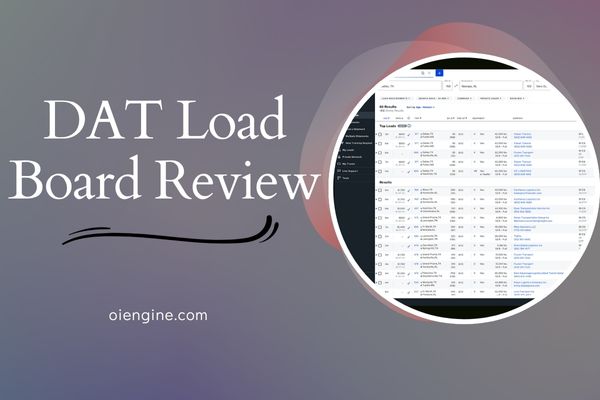
In the competitive world of freight matching, where 267+ million loads are posted annually, choosing the right load board can mean the difference between profitable hauls and empty miles. DAT Load Board has dominated the trucking software landscape for nearly five decades, but is it still worth the $49-$299 monthly investment?
After analyzing hundreds of user reviews and comparing features across the freight marketplace, I’ve discovered that DAT remains a powerful platform with significant advantages—and some concerning drawbacks. Whether you’re an owner-operator seeking consistent loads or a freight broker building your carrier network, this comprehensive review reveals exactly what you need to know.
In this detailed analysis, you’ll discover DAT’s complete pricing structure, core features that set it apart, real user experiences (both positive and negative), and viable alternatives. Let’s dive into whether DAT Load Board deserves its industry-leading reputation in 2026.
Table of Contents
- What Is DAT Load Board and Who Is It For?
- DAT Pricing Plans Breakdown: Finding Your Best Fit
- Core Features That Set DAT Apart
- Real User Experiences: The Good, Bad, and Ugly
- DAT vs. The Competition: Head-to-Head Comparison
- Security and Fraud Prevention: A Growing Concern
- Getting Started with DAT: Setup and Best Practices
- ROI Analysis: Is DAT Worth the Investment?
- DAT Integration Capabilities
- Frequently Asked Questions
- Conclusion
What Is DAT Load Board and Who Is It For?
DAT Load Board stands as North America’s largest digital freight marketplace, connecting carriers, brokers, and shippers through advanced load matching technology. Founded in 1978, this transportation management system has evolved from a simple bulletin board to a sophisticated platform processing over $1 trillion in freight transactions.
DAT’s 47-Year Legacy in Freight Matching
Starting as Dial-A-Truck, DAT pioneered electronic freight matching when most truckers relied on phone calls and physical boards. Today, owned by Roper Technologies (Nasdaq: ROP), the platform has transformed into a comprehensive freight analytics powerhouse that processes more loads than any competitor.
The company’s longevity speaks to its ability to adapt with industry changes. From DOS-based systems to cloud computing, DAT has consistently invested in technology that matters to trucking professionals.
Three User Types: Carriers, Brokers, and Shippers
Carriers and Owner-Operators: Access to 1.7+ million trucks makes finding backhauls and maximizing revenue easier. The platform’s spot market insights help drivers avoid deadhead miles and negotiate better rates.
Freight Brokers: Build and manage your carrier network with tools designed for efficiency. Features like LaneMakers help brokers find reliable capacity on challenging routes while broker credit scores minimize risk.
Shippers: Navigate market volatility with real-time freight rates and capacity insights. The platform provides visibility into supply chain dynamics that affect pricing and availability.
DAT Network Size: 1.7+ Million Trucks Strong
The sheer scale of DAT’s network creates opportunities unavailable on smaller platforms. With carriers posting trucks and brokers listing loads simultaneously, the freight marketplace operates 24/7 across all equipment types.
This massive network translates to practical benefits: more load options for carriers, broader capacity for brokers, and competitive pricing for shippers. However, size also brings challenges, particularly regarding quality control and fraud prevention.
DAT Pricing Plans Breakdown: Finding Your Best Fit
Understanding DAT’s pricing structure is crucial for maximizing ROI. The platform offers tiered plans designed for different business sizes and needs, though recent price increases have frustrated long-term users.
Carrier Plans Explained ($49-$299/month)
| Plan | Monthly Cost | Best For | Key Features |
| Standard | $49 | Part-time drivers | Basic search, mobile app, load alarms |
| Enhanced | $99 | Leased operators | 30-day rates, 2 search tabs |
| Pro | $149 | Owner-operators | 15-day rates, TriHaul tool |
| Select | $199 | Small fleets | 10 search tabs, MCI access |
| Office | $299 | Large fleets | Contract rates, LaneMakers |
Each tier builds upon the previous, adding features that justify the price jump. The Enhanced plan’s 30-day rate history helps with basic negotiations, while Pro users gain the revenue-maximizing TriHaul tool.
Broker Plans Analysis ($159-$449/month)
Broker plans start higher but include unlimited posting and advanced carrier vetting tools. The Express plan at $159/month covers basics, while the Office plan at $449/month adds group postings and contract rate visibility.
Key differentiators include CarrierWatch integration for insurance verification and priority booking features. These tools help brokers move freight faster while maintaining compliance standards.
Combo Plans: When They Make Sense
Combo plans merge carrier and broker features for businesses operating on both sides. At $299-$449/month, they’re cost-effective for companies running their own trucks while brokering additional loads.
Hidden Costs and Price Increase Concerns
Users report unexpected price hikes, with some experiencing 45% increases upon renewal. Additionally, each office user needs individual access, multiplying costs for growing companies.
Consider these potential add-ons: API integration fees, advanced analytics packages, and training costs for new users. Factor these into your budget before committing to a plan.
Core Features That Set DAT Apart
DAT’s feature set reflects decades of user feedback and industry evolution. While competitors offer similar basic functions, DAT’s implementation and integration create unique advantages.
DAT One Mobile App: Your Pocket Command Center
The mobile app transforms smartphones into complete dispatch offices. Drivers can search loads, check broker credit scores, and calculate profitability without returning to base.
Real-time updates ensure you never miss opportunities. Push notifications alert you to new loads matching your criteria, while integrated mapping shows fuel stops and weigh stations.
The app’s offline functionality proves invaluable in areas with poor connectivity. Downloaded rate data and saved searches remain accessible, keeping productivity high regardless of location.
TriHaul Tool: Maximizing Revenue Through Triangular Routing
TriHaul revolutionizes route planning by identifying profitable three-leg journeys. Instead of deadheading home, the tool suggests intermediate loads that maximize earnings per mile.
For example, a driver heading from Chicago to Atlanta might pick up an additional load to Nashville, then another back to Chicago. This triangular routing can increase revenue by 20-30% compared to traditional out-and-back runs.
The tool integrates with freight analytics to ensure suggested routes align with current market conditions.
Market Rate Data: 15-30 Day Historical Insights
Accurate rate information empowers better negotiations. DAT provides historical data showing rate trends, helping users identify whether current offers align with market standards.
The depth of data varies by plan, with higher tiers accessing more comprehensive historical information. This transparency helps prevent lowball offers and supports data-driven decision making.
LaneMakers: Finding Carriers on Difficult Routes
LaneMakers addresses a critical broker challenge: covering loads on lanes where regular capacity doesn’t exist. The tool identifies carriers who’ve previously run similar routes, even if they’re not actively searching.
This feature particularly benefits brokers handling specialized or remote deliveries. By expanding the potential carrier pool, LaneMakers reduces the risk of service failures.
Credit Scores and Company Reviews System
Financial stability matters in trucking. DAT’s credit monitoring helps carriers avoid broker fraud while brokers can verify carrier legitimacy before booking.
The review system adds another layer of protection. Users rate their experiences, creating accountability that benefits the entire network. However, some users report the system needs stronger verification to prevent fake reviews.
Real User Experiences: The Good, Bad, and Ugly
Analyzing hundreds of reviews reveals consistent themes about DAT’s strengths and weaknesses. Understanding these patterns helps set realistic expectations.
What Users Love Most (Based on 500+ Reviews)
Ease of Use: The interface receives consistent praise for intuitive design. New users report getting productive within hours, not days.
Load Volume: No other platform matches DAT’s sheer number of available loads. This variety means drivers rarely struggle to find suitable freight.
Mobile Functionality: The app’s reliability and feature parity with desktop versions earn high marks. Drivers appreciate managing their business from anywhere.
Customer Support: When issues arise, most users report helpful, knowledgeable support staff who resolve problems quickly.
Common Complaints and Deal Breakers
Scammer Proliferation: Fraud remains DAT’s biggest challenge. Users report fake loads, identity theft attempts, and payment scams despite platform safeguards.
Double brokering complaints appear frequently. Bad actors post loads they don’t control, creating chains that delay payment and increase risk.
System Reliability Issues: The platform occasionally freezes or requires manual refreshes, causing users to miss time-sensitive opportunities. Auto-refresh failures particularly frustrate brokers managing multiple searches.
Sprinter Van Gap: Despite mobile app support, the desktop version lacks a dedicated Sprinter van category. This forces operators to filter through inappropriate loads manually.
Success Stories from Long-Term Users
Established users share strategies for maximizing DAT’s value. One owner-operator reported doubling revenue after mastering TriHaul routing and rate negotiation features.
A small trucking company credited DAT’s analytics with identifying profitable lanes they’d previously overlooked. By focusing on data-driven decisions, they expanded from three to fifteen trucks.
Brokers highlight relationship-building through the platform. The review system helps identify reliable partners, creating networks that benefit all parties long-term.
DAT vs. The Competition: Head-to-Head Comparison
Understanding how DAT compares to alternatives helps determine if it’s your best option. Each platform has strengths serving different market segments.
DAT vs. TruckStop.com
TruckStop.com (formerly Internet Truckstop) represents DAT’s primary competitor. While both offer comprehensive features, key differences emerge:
| Feature | DAT | TruckStop.com |
| Load Volume | Highest | Very High |
| Pricing | $49-$449 | $35-$425 |
| Mobile App | Excellent | Good |
| Rate Data | 15-30 days | 14 days |
| Special Tools | TriHaul, LaneMakers | Load tracking focus |
TruckStop.com’s lower entry price attracts budget-conscious users. However, DAT’s specialized tools often justify the premium for serious operators.
DAT vs. 123Loadboard
123Loadboard positions itself as the user-friendly alternative. At $35/month for basic access, it appeals to newcomers and part-time operators.
The platform excels at simplicity but lacks DAT’s analytical depth. For basic load matching, 123Loadboard suffices. For data-driven operations, DAT provides superior insights.
When to Choose Alternatives Over DAT?
Consider alternatives if you:
- Operate part-time with minimal load requirements
- Focus exclusively on local or regional routes
- Need the absolute lowest price point
- Prefer simpler interfaces over comprehensive features
Specialized platforms like Uber Freight or Amazon Relay might better serve niche needs. Evaluate your specific requirements before committing to any platform.
Security and Fraud Prevention: A Growing Concern
Fraud represents the trucking industry’s fastest-growing threat. DAT’s size makes it an attractive target for scammers, creating challenges for legitimate users.
Current Security Measures
DAT implements multiple verification layers, including DOT number validation and insurance confirmation. The platform monitors suspicious patterns and removes fraudulent listings when detected.
Two-factor authentication adds account security, while payment protection services help carriers avoid bad brokers. These measures reduce but don’t eliminate risk.
User Reports of Scamming and Double Brokering
Despite safeguards, users report persistent fraud attempts. Common schemes include:
- Fake carrier identities stealing legitimate MC numbers
- Load phishing where scammers harvest personal information
- Payment redirection fraud targeting unsuspecting carriers
Double brokering remains particularly problematic. Brokers unknowingly book with fraudulent carriers who then re-broker loads, creating payment chains that often break down.
What DAT Is Doing to Address These Issues?
DAT continues investing in fraud prevention. Recent updates include enhanced identity verification and machine learning algorithms detecting suspicious behavior patterns.
The company encourages user reporting and responds to fraud complaints. However, the cat-and-mouse game with scammers requires constant vigilance from all users.
Getting Started with DAT: Setup and Best Practices
Maximizing DAT’s value starts with proper setup. These strategies help new users avoid common pitfalls while accelerating success.
Account Setup Process
Registration requires basic company information and DOT/MC numbers. Verification typically completes within 24-48 hours, though complex cases may take longer.
Choose your plan carefully. While upgrading is easy, downgrading often requires waiting until renewal. Start with a lower tier if unsure about long-term needs.
Complete your profile thoroughly. Detailed information builds trust with potential partners and improves search rankings within the platform.
Optimizing Your Profile for Better Results
For Carriers:
- List all equipment types and special capabilities
- Upload insurance certificates and safety ratings
- Include preferred lanes and cargo types
- Add professional photos of equipment
For Brokers:
- Highlight payment terms and credit standing
- Specify industries or lanes of expertise
- Include customer testimonials when possible
- List technology integrations and capabilities
Pro Tips from Experienced Users
Search Optimization: Use specific city pairs rather than states for better results. Save frequently-used searches for quick access.
Rate Negotiation: Always check historical rates before accepting offers. Know your worth and stick to profitable minimums.
Relationship Building: Focus on developing repeat business with reliable partners. The review system helps identify trustworthy companies worth cultivating.
Fraud Avoidance: Verify new partners through multiple channels. If something seems suspicious, trust your instincts and investigate further.
ROI Analysis: Is DAT Worth the Investment?
Determining DAT’s value requires analyzing costs against potential returns. The calculation varies significantly based on operation size and utilization.
Cost vs. Value for Different Business Sizes
Single Owner-Operators: At $149/month for the Pro plan, DAT costs about $5/day. Finding just one additional load monthly typically covers the entire cost.
Small Fleets (2-5 trucks): The $199 Select plan breaks down to roughly $40/truck monthly. Enhanced routing and rate data often generate savings exceeding costs.
Large Operations: Enterprise pricing varies but typically includes volume discounts. The efficiency gains from integrated workflows usually justify premium pricing.
When DAT Pays for Itself?
Most users report positive ROI within the first month. Key value drivers include:
- Reduced deadhead miles through better load matching
- Higher rates from data-driven negotiations
- Time savings from automated search features
- Decreased fraud losses through verification tools
Track these metrics monthly to ensure continued value. If ROI turns negative, reassess your plan or usage patterns.
Warning Signs It’s Not Right for You
DAT might not suit operations that:
- Run mostly dedicated routes with little spot market exposure
- Operate in limited geographic areas with established relationships
- Cannot invest time learning the platform’s advanced features
- Find the fraud risk unacceptable despite prevention measures
Honest assessment prevents wasted investment. Consider starting with a monthly plan to test fit before committing annually.
DAT Integration Capabilities
Modern trucking operations require connected systems. DAT’s integration options streamline workflows and eliminate duplicate data entry.
TMS Integration Options
Leading transportation management systems integrate seamlessly with DAT. Popular integrations include:
- McLeod Software
- TMW Systems
- Prophesy Transportation
- Tailwind TMS
These connections enable automatic load posting, real-time rate updates, and consolidated reporting. Evaluate integration quality before selecting a TMS partner.
API Access and Custom Solutions
DAT’s API opens possibilities for custom development. Common applications include:
- Automated load searching based on truck availability
- Real-time rate feeds for dynamic pricing
- Custom dashboards combining DAT data with internal metrics
- Mobile apps tailored to specific workflows
API access typically requires higher-tier plans. Factor development costs into ROI calculations when considering custom solutions.
Mobile vs. Desktop Feature Differences
While DAT One mobile app impressively mirrors desktop functionality, some differences exist:
Desktop Advantages:
- Multiple search tabs for complex queries
- Advanced filtering options
- Detailed analytics dashboards
- Bulk operations for high-volume users
Mobile Advantages:
- GPS integration for location-based searches
- Camera integration for document capture
- Offline functionality for poor connectivity
- Push notifications for time-sensitive opportunities
Most users benefit from utilizing both platforms strategically.
Frequently Asked Questions
Is DAT Load Board Worth It for Owner-Operators?
For most owner-operators, DAT provides solid value. The Pro plan at $149/month includes features specifically designed for single-truck operations, including TriHaul routing and 15-day rate history.
Success depends on utilization. Active operators running primarily spot market freight typically see positive ROI within weeks. Those with dedicated contracts may find less value.
Can You Share DAT Login Credentials?
No, sharing login credentials violates DAT’s terms of service and can result in account termination. Each user needs individual access to maintain security and accurate tracking.
Some users discovered this policy after account suspensions. DAT monitors login patterns and flags suspicious activity, including multiple simultaneous sessions from different locations.
What’s the Difference Between DAT and TruckStop?
While both platforms offer similar core functionality, key differences include:
- DAT generally has more loads posted but costs slightly more
- TruckStop provides more granular load interest indicators
- DAT’s TriHaul tool has no equivalent on TruckStop
- TruckStop’s entry price point is lower
Choose based on specific feature needs rather than general reputation.
Does DAT Offer Free Trials?
DAT occasionally offers limited free trials, typically 7-14 days. However, these aren’t always available and may require speaking with sales representatives.
Some users recommend starting with the lowest tier plan for a month as an extended trial. This provides full access to evaluate fit before upgrading.
How Accurate Are DAT’s Rate Estimates?
Rate accuracy depends on lane popularity and data recency. High-volume lanes typically show accuracy within 5-10% of actual rates.
Less common routes may show wider variations. Always verify rates through multiple sources when possible, and use DAT’s data as a negotiation starting point rather than absolute truth.
Conclusion
DAT Load Board maintains its industry leadership through sheer scale, innovative features, and continuous platform investment. For serious trucking professionals seeking comprehensive freight matching solutions, it remains the gold standard despite notable flaws.
The platform excels for freight brokers building carrier networks, owner-operators maximizing revenue, and fleets requiring sophisticated analytics. The ROI typically justifies costs for active users who invest time mastering available tools.
However, persistent fraud issues and rising prices create legitimate concerns. Potential users should weigh these challenges against DAT’s undeniable advantages in load volume and feature depth.
My recommendation: Start with a monthly Pro plan ($149) if you’re a carrier or Express plan ($159) if you’re a broker. Use this time to evaluate whether DAT’s benefits outweigh its drawbacks for your specific operation. If successful, consider annual plans for cost savings.
Ready to test DAT’s capabilities? Visit their website to explore current promotions and speak with representatives about your specific needs. Remember to factor in training time and potential integration costs when budgeting for implementation.