
If you’re considering a career in commercial driving, understanding the different CDL license types is your first crucial step. The commercial driver’s license system can seem complex, but it breaks down into three main categories that determine what vehicles you can operate and which career paths are available to you.
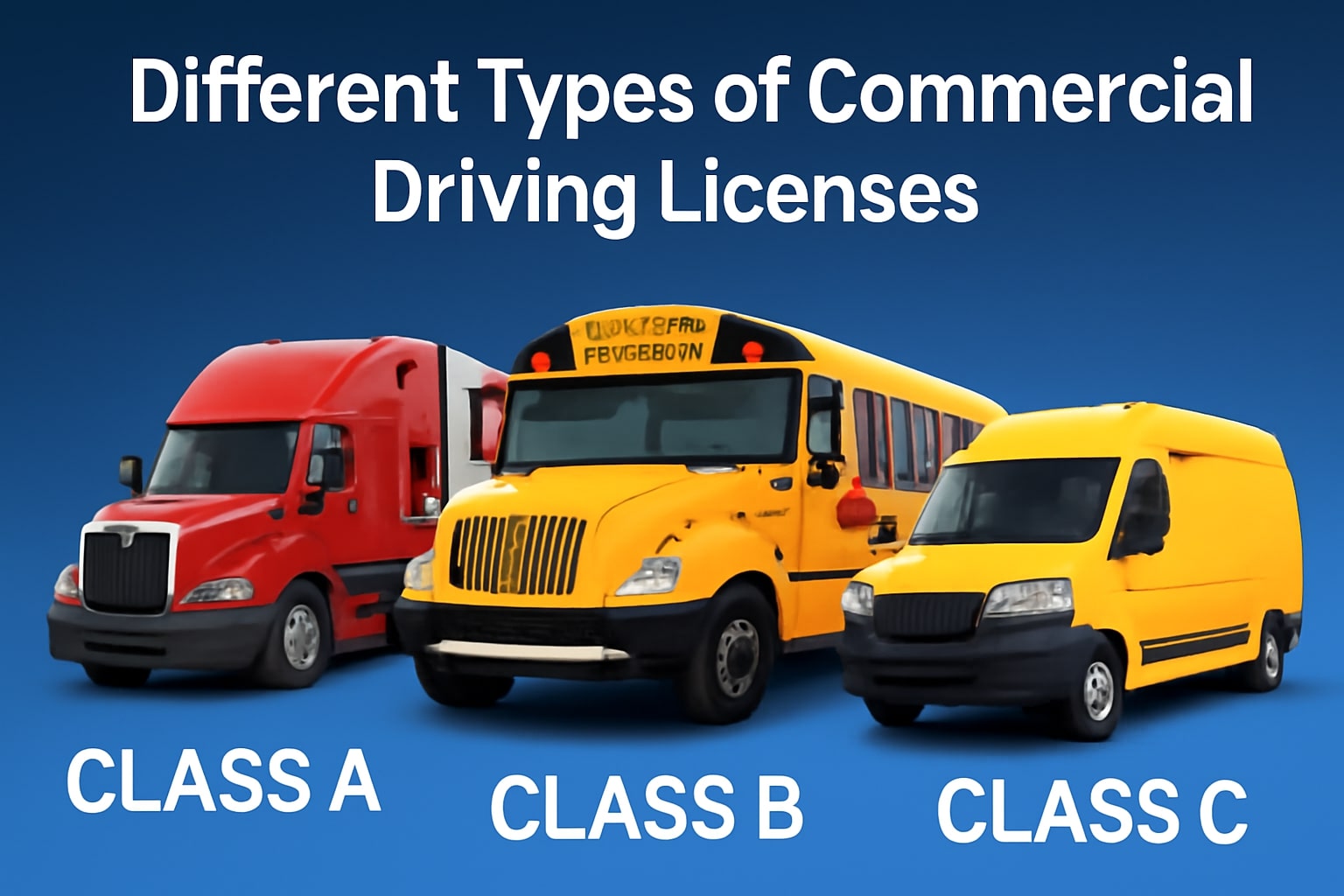
There are three different types of commercial driving licenses: Class A, Class B, and Class C. Each CDL classification is based on the vehicle’s gross vehicle weight rating (GVWR) and the specific type of commercial motor vehicle you plan to operate. Whether you’re aiming to drive massive tractor-trailers across the country or transport passengers locally, there’s a specific license class designed for your needs.
This comprehensive guide will walk you through each CDL class, their requirements, the vehicles you can drive, and how to obtain the right license for your career goals. We’ll also cover endorsements, salary expectations, and the step-by-step process to get your commercial driving license in 2026.
Table of Contents
- What Are the Different Types of Commercial Driving Licenses?
- Understanding CDL Requirements and Regulations
- Class A CDL: The Most Comprehensive License
- Class B CDL: The Versatile Middle Ground
- Class C CDL: Specialized Commercial Driving
- CDL Endorsements: Expanding Your Driving Capabilities
- How to Get Your Commercial Driving License in 2026?
- Choosing the Right CDL Class for Your Career
- Common Mistakes When Getting Your CDL
- Frequently Asked Questions
- Conclusion
What Are the Different Types of Commercial Driving Licenses?
Quick Overview of CDL Classes
The Federal Motor Carrier Safety Administration (FMCSA) established three distinct commercial driver’s license classes to ensure drivers have the proper training and qualifications for different vehicle types. Understanding these CDL license types helps you make informed decisions about your trucking career path.
Class A CDL covers the heaviest and most complex vehicles, typically used for long-haul trucking. Class B CDL allows operation of large single vehicles like buses and dump trucks. Class C CDL is for smaller commercial vehicles that transport passengers or hazardous materials.
CDL Classification Decision Tree
To determine which commercial license class you need, consider these key factors:
- Vehicle Weight: Is the GVWR over 26,001 pounds?
- Towing Capacity: Will you tow trailers over 10,000 pounds?
- Cargo Type: Are you transporting passengers or hazardous materials?
- Career Goals: Do you want local, regional, or over-the-road opportunities?
Understanding CDL Requirements and Regulations
Federal vs State Requirements
While the FMCSA sets minimum federal standards for commercial driving licenses, individual states can impose additional requirements. Federal regulations ensure consistency across state lines, but you’ll obtain your CDL through your state’s Department of Motor Vehicles or equivalent agency.
All CDL holders must comply with federal Hours of Service regulations, maintain medical certification, and follow drug and alcohol testing requirements. States may add specific endorsement requirements or additional testing based on local transportation needs.
Age Requirements for Each CDL Class
Age restrictions for commercial driver’s licenses vary based on the type of driving you plan to do:
- 18 years old: You can obtain any class of CDL for intrastate commerce (driving within your state only)
- 21 years old: Required for interstate commerce (crossing state lines) with any CDL class
- 21 years old: Mandatory for transporting hazardous materials regardless of location
Some states participate in pilot programs allowing 18-20 year olds to drive interstate under specific conditions. However, most trucking companies prefer drivers who are 21 or older for insurance and regulatory reasons.
Medical Certification Requirements
Every commercial driver must pass a Department of Transportation (DOT) physical exam before obtaining their CDL. This medical examination ensures you’re physically capable of safely operating a commercial motor vehicle.
The DOT physical includes vision and hearing tests, blood pressure monitoring, and overall health assessment. Medical certificates are typically valid for two years, though certain conditions may require more frequent examinations. Mechanics who test drive commercial vehicles also need to meet these same medical standards if they require a CDL.
Class A CDL: The Most Comprehensive License
What Vehicles Can You Drive with a Class A CDL?
A Class A commercial driver’s license authorizes you to operate the widest range of commercial vehicles. This includes any combination of vehicles with a gross combination weight rating (GCWR) of 26,001 pounds or more, provided the towed vehicle exceeds 10,000 pounds.
Common Class A vehicles include:
- Tractor-trailers (semi-trucks)
- Truck and trailer combinations
- Flatbed trucks with heavy trailers
- Tanker vehicles
- Livestock carriers
- Double and triple trailer combinations (with endorsement)
With proper endorsements, Class A license holders can also operate any Class B or Class C vehicles, making it the most versatile commercial driving license available.
Class A CDL Weight Requirements Explained
Understanding weight ratings is crucial for Class A CDL holders. The gross combination weight rating (GCWR) includes the total weight of both the power unit (truck) and the towed unit (trailer) when fully loaded.
For example, if your truck has a GVWR of 20,000 pounds and you’re pulling a trailer rated at 15,000 pounds, your GCWR is 35,000 pounds. This combination requires a Class A license because it exceeds 26,001 pounds total with a trailer over 10,000 pounds.
Weight distribution and proper loading are critical skills for Class A drivers. Overweight violations can result in fines, and improper weight distribution can make vehicles dangerous to operate.
Career Opportunities with Class A License
Class A CDL holders enjoy the broadest range of career opportunities in the trucking industry. Long-haul trucking positions offer the chance to see the country while earning competitive wages. Regional routes provide a balance between road time and home time.
Specialized opportunities include hauling oversized loads, transporting hazardous materials, or operating car carriers. Many Class A drivers eventually become owner-operators, purchasing their own trucks and working as independent contractors for higher earning potential.
Class A CDL Endorsements and Specializations
Endorsements allow Class A drivers to expand their qualifications and earning potential:
- H (HazMat): Transport hazardous materials
- N (Tanker): Operate vehicles carrying liquids or gases
- T (Double/Triple): Pull multiple trailers
- X (Combination): Both HazMat and tanker qualified
Each endorsement requires passing additional written exams and sometimes skills tests. HazMat endorsements also require background checks and regular renewals.
Class B CDL: The Versatile Middle Ground
Class B CDL Vehicle Types and Examples
A Class B commercial driver’s license permits operation of single vehicles with a GVWR of 26,001 pounds or more, or towing a trailer not exceeding 10,000 pounds. This classification opens doors to diverse driving careers without the complexity of articulated vehicles.
Class B vehicles include:
- Straight trucks and box trucks
- Dump trucks
- Cement mixers
- Large buses (city, tour, school)
- Garbage trucks
- Delivery trucks for major retailers
Weight Limits and Restrictions for Class B
The key distinction for Class B CDL requirements centers on towing capacity. While you can operate heavy single vehicles, any towed unit must remain under 10,000 pounds GVWR. This limitation typically excludes full-size semi-trailers but allows small utility trailers.
For instance, a Class B driver operating a 30,000-pound dump truck can legally tow a 7,000-pound equipment trailer. However, attempting to pull a 12,000-pound trailer would violate the license restrictions and require a Class A CDL.
Popular Class B CDL Jobs and Industries
Class B license holders find employment across numerous industries. School districts constantly need bus drivers, offering stable schedules aligned with academic calendars. Construction companies seek dump truck and cement mixer operators for local projects.
Waste management companies provide steady employment for garbage truck drivers. Tourism businesses hire Class B drivers for charter buses and airport shuttles. Many positions offer regular hours and the advantage of returning home daily.
When to Choose Class B Over Class A?
Selecting between Class A and Class B depends on your career goals and lifestyle preferences. Choose Class B if you prefer local driving, want predictable schedules, or wish to avoid the complexities of trailer combinations.
Class B makes sense for drivers who want commercial driving opportunities without extended time away from home. The training period is typically shorter and less expensive than Class A programs. However, Class B generally offers fewer job options and lower maximum earning potential compared to Class A positions.
Class C CDL: Specialized Commercial Driving
Class C CDL Requirements and Qualifications
A Class C commercial driver’s license covers vehicles that don’t meet Class A or B weight requirements but still need special licensing. This includes vehicles under 26,001 pounds GVWR that transport 16 or more passengers (including the driver) or carry hazardous materials requiring placards.
The qualifications focus more on the cargo or passenger capacity than vehicle size. Even a standard van becomes a commercial vehicle requiring a Class C license when configured to transport enough passengers or when carrying certain hazardous materials.
Passenger and HazMat Transportation
Class C licenses commonly apply to passenger transportation services. Airport shuttles, hotel vans, and small transit buses fall under this category. Drivers must demonstrate skills in passenger safety, emergency procedures, and customer service.
HazMat transportation with smaller vehicles also requires a Class C CDL. This includes delivery trucks carrying compressed gases, certain chemicals, or other materials requiring hazardous material placards. Proper legal protection becomes especially important for drivers handling hazardous materials.
Class C Vehicle Examples and Uses
Common Class C vehicles and their uses include:
- 15-passenger vans for churches or organizations
- Small buses for daycare or assisted living facilities
- Delivery vehicles carrying hazmat materials
- Box trucks under 26,001 pounds with hazmat
The variety of Class C applications means drivers often specialize in specific industries. Some focus on passenger transport, while others concentrate on hazmat delivery for industrial or medical suppliers.
Is a Class C CDL Right for You?
Consider a Class C license if you want commercial driving opportunities without operating large vehicles. This option suits those seeking part-time work or supplemental income through passenger transportation or specialized delivery services.
Class C typically requires the least training investment and offers flexible scheduling in many positions. However, it also generally provides the lowest earning potential among the three CDL classifications.
CDL Endorsements: Expanding Your Driving Capabilities
Complete List of CDL Endorsements
CDL endorsements unlock specialized driving opportunities across all license classes. Each endorsement represents additional qualifications beyond your base commercial license.
| Endorsement | Description | Required For |
| H | Hazardous Materials | Transporting materials requiring placards |
| N | Tank Vehicles | Liquid or gas cargo in tanks |
| P | Passenger | Vehicles carrying 16+ passengers |
| S | School Bus | Operating school buses |
| T | Double/Triple Trailers | Pulling multiple trailers |
| X | Combination | Both hazmat and tanker |
How to Add Endorsements to Your License?
Adding endorsements requires passing written knowledge tests specific to each qualification. Some endorsements like passenger or school bus also require skills tests demonstrating vehicle operation proficiency.
The process typically involves studying endorsement-specific materials, passing the written exam at your DMV, and paying associated fees. Hazmat endorsements require additional TSA background checks and fingerprinting. Most endorsements can be added anytime after obtaining your base CDL.
Which Endorsements Increase Earning Potential?
Hazmat and tanker endorsements consistently offer the highest pay premiums. Drivers with X endorsements (combination hazmat/tanker) often earn 15-25% more than those without specialized qualifications. These endorsements open opportunities in petroleum, chemical, and specialized freight transportation.
Passenger endorsements provide steady employment but typically offer lower pay increases. However, school bus drivers often receive benefits packages that enhance overall compensation. Double/triple endorsements mainly benefit long-haul drivers seeking to maximize freight capacity.
How to Get Your Commercial Driving License in 2026?
Step-by-Step CDL Application Process
Getting your commercial driver’s license follows a structured process:
- Verify Eligibility: Ensure you meet age requirements and have a valid regular driver’s license
- Obtain DOT Medical Certificate: Pass the physical examination with a certified medical examiner
- Study for Written Tests: Use your state’s CDL manual and quality training resources
- Apply for Commercial Learner’s Permit (CLP): Pass general knowledge and specific class tests
- Complete Entry-Level Driver Training (ELDT): Enroll in an approved program
- Practice Driving: Gain experience with your CLP (supervised driving only)
- Schedule Road Test: After holding CLP for minimum required period
- Pass Skills Tests: Complete pre-trip inspection, basic controls, and road test
- Receive CDL: Pay fees and get your commercial license
ELDT Requirements and Training Programs
As of February 7, 2022, all new CDL applicants must complete Entry-Level Driver Training (ELDT) from an approved training provider. This federal mandate ensures consistent, quality training across all states.
ELDT includes both theory and behind-the-wheel instruction covering vehicle inspection, basic controls, and on-road driving. Training providers must be listed on FMCSA’s Training Provider Registry. Programs range from 3-8 weeks for full-time students.
CLP to CDL: Timeline and Testing
After obtaining your Commercial Learner’s Permit, federal regulations require holding it for at least 14 days before taking the CDL skills test. This waiting period allows practice time with a qualified CDL holder.
Most students need 4-8 weeks of practice before feeling confident for the skills test. The test includes three parts: pre-trip inspection (identifying vehicle components and safety issues), basic controls (backing and turning maneuvers), and road test (driving in traffic).
CDL Training Costs and Financing Options
CDL training costs vary significantly based on program type and location. Community colleges often offer the most affordable options at $1,500-$3,000. Private truck driving schools typically charge $3,000-$7,000 for comprehensive programs.
Many trucking companies offer paid CDL training programs where they cover costs in exchange for a driving commitment (usually 1-2 years). Financial aid, workforce development grants, and veterans benefits can also offset training expenses. Some employers reimburse training costs through tuition reimbursement programs.
Choosing the Right CDL Class for Your Career
Comparing Salary Potential Across Classes
According to the Bureau of Labor Statistics, commercial driver salaries vary significantly by license class and specialization:
| CDL Class | Average Annual Salary | Top 10% Earn |
| Class A | $54,320 | $75,000+ |
| Class B | $44,000 | $58,000+ |
| Class C | $35,000 | $45,000+ |
These figures represent median wages, with actual earnings varying by location, experience, and endorsements. Owner-operators with Class A licenses often exceed $100,000 annually, while specialized hazmat or oversized load drivers command premium rates.
Lifestyle Differences: Local vs Long-Haul
CDL class selection significantly impacts your work-life balance. Class A long-haul drivers typically spend weeks on the road, sleeping in their trucks and covering thousands of miles. This lifestyle offers adventure and higher pay but requires extended time away from home.
Class B and C drivers usually work locally or regionally, returning home daily. These positions offer more predictable schedules and family time but generally provide lower compensation. Consider your personal priorities when choosing between higher earnings and home time.
Growth Opportunities and Career Advancement
Each CDL class offers unique advancement paths. Class A drivers can progress to owner-operator status, become trainers, or move into dispatch and logistics management. Some transition to specialized hauling for increased earnings.
Class B drivers often advance to supervisory roles, fleet management, or safety positions. Class C drivers might progress to larger vehicles by upgrading their license or specialize in specific industries like medical transport or hazardous waste.
Common Mistakes When Getting Your CDL
One frequent error is choosing the wrong CDL class initially. Many drivers obtain a Class B thinking it’s sufficient, only to discover most high-paying opportunities require Class A. Research job markets in your area before committing to a specific license class.
Underestimating training requirements causes many failures. The skills test is challenging, requiring precise vehicle control and comprehensive safety knowledge. Inadequate practice time or choosing substandard training programs often results in multiple test attempts and additional costs.
Neglecting endorsement opportunities limits earning potential. While endorsements require extra testing, they significantly expand job options. Planning for endorsements during initial training is more efficient than adding them later. Many drivers also forget that medical certificates require renewal every two years.
Frequently Asked Questions
Can You Drive a Class B Vehicle with a Class A CDL?
Yes, a Class A CDL allows you to operate Class B and Class C vehicles. The Class A license is the most comprehensive, covering all commercial vehicle types below its classification. However, you still need appropriate endorsements for specific vehicle types like passenger buses or hazmat transport.
What’s the Difference Between CDL and CLP?
A Commercial Learner’s Permit (CLP) is a temporary permit allowing supervised practice driving of commercial vehicles. A CDL is the full commercial driver’s license permitting independent operation. You must hold a CLP for at least 14 days before testing for your CDL, and the CLP is valid for up to one year.
How Long Does It Take to Get a CDL?
The timeline varies based on training type and individual progress. Full-time CDL programs typically take 3-7 weeks. Part-time programs may extend to 12 weeks or longer. After completing training, add time for scheduling and passing tests. Most people obtain their CDL within 2-3 months of starting the process.
Do You Need a CDL for Large RVs?
Most states don’t require a CDL for recreational vehicles used for personal use, regardless of size. However, some states require special licenses for RVs exceeding certain weight limits (typically over 26,000 pounds). Commercial use of any large vehicle, including RVs converted for business purposes, requires appropriate CDL classification.
Can You Get a CDL with a DUI on Your Record?
A DUI doesn’t automatically disqualify you from obtaining a CDL, but it creates significant challenges. Most companies have strict policies against hiring drivers with DUI convictions, especially recent ones. Federal regulations impose lifetime CDL disqualification for multiple DUI offenses. Time passed since the conviction and demonstrated rehabilitation improve your chances.
Conclusion
Understanding the different types of commercial driving licenses empowers you to make informed career decisions. Whether you choose Class A for maximum opportunities, Class B for local stability, or Class C for specialized work, each path offers viable career options in the growing transportation industry.
Your choice between CDL classifications should align with your lifestyle preferences, income goals, and long-term career aspirations. Consider factors like time away from home, physical demands, and advancement opportunities when making your decision.
Ready to start your commercial driving career? Research approved ELDT training providers in your area, ensure you meet medical requirements, and begin studying for your CLP tests. The transportation industry needs qualified drivers across all CDL classes, making 2026 an excellent time to begin your journey in commercial driving.