
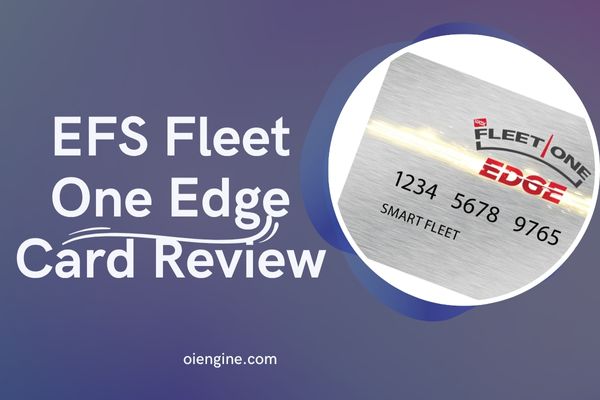
Fleet fuel costs eating into your profits? The right fuel card can save you $6,150 per truck annually. That’s not marketing hype – it’s what trucking companies are actually achieving with strategic fuel management.
Rising fuel costs, complex fleet management systems, and hidden fees with traditional payment methods are crushing profit margins. The EFS Fleet One Edge Card promises to solve these problems with 15¢ per gallon average fuel savings at 4,000+ EDGE locations and zero transaction fees.
As part of WEX Inc., one of the largest fleet payment processors globally, this card is accepted at over 12,000 truck stops nationwide. In this comprehensive review, we’ll analyze the real features, actual savings breakdown, security measures, network coverage, and provide honest comparisons with alternatives.
Table of Contents
- What is the EFS Fleet One Edge Card?
- How Much Can You Really Save with EFS Fleet One Edge? [Detailed Breakdown]
- Complete Feature Analysis: What You Get with EFS Fleet One Edge
- Network Coverage & Acceptance: Where Can You Use It?
- Security Features & Fraud Prevention
- Fee Structure: The Complete Truth
- Setting Up & Managing Your EFS Fleet One Edge Account
- Common Mistakes Fleet Owners Make (And How to Avoid Them)
- EFS Fleet One Edge vs Competitors: Honest Comparison
- Is EFS Fleet One Edge Right for Your Fleet? [Decision Framework]
- Pro Tips: Maximizing Your EFS Fleet One Edge Benefits
- Frequently Asked Questions
- How long does it take to get approved for EFS Fleet One Edge?
- Can owner-operators with one truck benefit from this card?
- What happens if I use the card outside the EDGE network?
- How do I dispute a transaction on my EFS Fleet One Edge card?
- Can I use EFS Fleet One Edge for DEF fluid purchases?
- Is there a minimum monthly purchase requirement?
- How does the tire discount program work exactly?
- Conclusion
What is the EFS Fleet One Edge Card?
The EFS Fleet One Edge Card is a specialized fleet fuel card designed for trucking companies and owner-operators with up to 50 vehicles. It combines fuel discounts, expense management tools, and additional savings on business essentials like tires and maintenance.
Understanding the WEX Fleet Ecosystem
WEX Inc. operates multiple fuel card products, each targeting different fleet sizes and needs. The Fleet One Edge Card sits in their mid-tier offering, bridging the gap between basic fuel cards and enterprise-level solutions.
The WEX EDGE network forms the backbone of this card’s value proposition. This proprietary discount network includes major truck stops and travel centers where cardholders receive preferential pricing without additional fees.
Unlike generic business credit cards, this system integrates directly with fleet management software. This integration provides real-time tracking, automated IFTA reporting, and detailed analytics that help fleet managers optimize operations.
Key Differences Between EFS and Fleet One Edge
Many fleet managers confuse EFS cards with Fleet One Edge cards, but they serve different purposes. EFS cards target larger fleets (50+ trucks) with more complex needs, offering advanced features like driver payroll integration and multi-currency support.
Fleet One Edge focuses on small to medium fleets, prioritizing ease of use and maximum fuel savings. The simplified structure means faster approval times and less administrative overhead for busy owner-operators.
The pricing structure also differs significantly. While EFS cards may include monthly fees for premium features, Fleet One Edge maintains a zero-fee structure for basic usage, making it more accessible for smaller operations.
Who This Card is Designed For? (Fleet Size & Type Analysis)
The sweet spot for Fleet One Edge is fleets between 5-50 trucks. These operations benefit most from the fuel discounts while avoiding the complexity of enterprise-level systems.
Owner-operators with just one or two trucks can still benefit, especially if they’re running long-haul routes through EDGE network locations. The savings on fuel alone can justify the card, even for single-truck operations averaging 10,000+ miles monthly.
Local delivery fleets might find less value, particularly if their routes don’t align with EDGE network locations. These operations should calculate potential savings based on their specific route patterns before committing.
How Much Can You Really Save with EFS Fleet One Edge? [Detailed Breakdown]
Let’s cut through the marketing claims and examine real-world savings. The advertised 15¢ per gallon discount represents an average across all EDGE network locations, but actual savings vary by location and current fuel prices.
Fuel Savings Calculator: Your Actual Annual Savings
Here’s a realistic breakdown based on different fleet sizes and mileage:
| Fleet Size | Annual Miles/Truck | Fuel Usage (6 MPG) | Savings at 15¢/gal | Total Annual Savings |
| 1 Truck | 100,000 | 16,667 gallons | $2,500 | $2,500 |
| 5 Trucks | 100,000 | 83,335 gallons | $12,500 | $12,500 |
| 25 Trucks | 100,000 | 416,675 gallons | $62,501 | $62,501 |
| 50 Trucks | 100,000 | 833,350 gallons | $125,003 | $125,003 |
These calculations assume consistent EDGE network usage. Real-world savings typically range from 60-80% of these maximums due to occasional out-of-network fueling.
Hidden Savings Beyond Fuel (Tires, Maintenance, Hotels)
Fuel discounts grab headlines, but the additional savings can be substantial. The tire discount program averages $100+ off MSRP per tire, which adds up quickly for fleets replacing 50-100 tires annually.
Maintenance savings through partner networks typically range from 10-15% on routine services. For a fleet spending $50,000 annually on maintenance, that’s another $5,000-7,500 in savings.
Hotel discounts averaging 20% help reduce driver expenses on long hauls. A fleet logging 1,000 hotel nights annually at $80/night saves approximately $16,000 through partner programs.
Real Fleet Case Studies: Documented Savings Examples
A 15-truck refrigerated carrier based in Texas reported $47,000 in annual savings after switching from credit cards. Their breakdown: $31,000 from fuel discounts, $8,000 from tire purchases, and $8,000 from maintenance savings.
A small owner-operator running dedicated lanes between California and Arizona saved $3,700 in their first year. Despite having just one truck, strategic route planning through EDGE locations maximized their discount opportunities.
Regional carriers often see the highest savings percentages. A 30-truck fleet operating primarily in the Southeast achieved 18% total cost reduction by optimizing routes around EDGE network locations.
Savings Comparison Table: EFS vs Credit Cards vs Competitors
| Payment Method | Avg Fuel Savings | Transaction Fees | Additional Discounts | Annual Cost (25 trucks) |
| Fleet One Edge | 15¢/gallon | $0 at EDGE | Tires, maintenance, hotels | -$62,500 (savings) |
| Credit Cards | 0-2% cashback | 0-3% | Limited | -$8,000 (cashback) |
| Comdata | 10-12¢/gallon | Varies | Similar | -$45,000 (savings) |
| Fuelman | 8-10¢/gallon | Monthly fees | Maintenance only | -$35,000 (savings) |
Complete Feature Analysis: What You Get with EFS Fleet One Edge
Understanding every feature helps maximize value from your fleet fuel card. Let’s examine what sets Fleet One Edge apart from basic fuel cards.
EDGE Network Benefits (4,000+ Discount Locations)
The EDGE network includes major chains like Pilot Flying J, TA, Petro, and AMBEST. These aren’t random discounts – they’re negotiated fleet rates typically reserved for large carriers.
Real-time pricing updates through the mobile app let drivers find the best prices along their routes. This transparency eliminates guesswork and helps dispatchers plan fuel stops strategically.
Network locations also offer priority pumping lanes during peak hours at select locations. This seemingly small benefit can save 20-30 minutes per fuel stop during busy periods.
Zero-Fee Structure Explained
No annual fees, no monthly fees, no card fees – this isn’t a limited-time promotion. The zero-fee structure applies to all EDGE network transactions indefinitely.
This fee structure makes the card accessible for smaller fleets who can’t justify monthly fees. Even if you only fuel once weekly, you’re still saving money compared to cash or credit card purchases.
The only fees you might encounter are for out-of-network transactions or replacement cards. These are clearly disclosed and easily avoidable with proper planning.
Mobile App Ecosystem (WEX CardControl & CarrierControl)
WEX CardControl gives drivers real-time access to card balances, transaction history, and nearby EDGE locations. The interface is surprisingly intuitive, even for less tech-savvy drivers.
CarrierControl provides fleet managers with deeper analytics and control options. Set spending limits, restrict purchase types, or temporarily disable cards instantly from your smartphone.
The apps integrate with major fleet tracking systems, creating a comprehensive view of vehicle location, fuel consumption, and driver behavior. This integration helps identify inefficient routes or potential fuel theft.
Advanced Reporting & Analytics Dashboard
The online dashboard transforms raw transaction data into actionable insights. Track fuel consumption by vehicle, driver, or route to identify optimization opportunities.
Automated IFTA reporting saves hours of administrative work quarterly. The system accurately tracks state-by-state mileage and fuel purchases, generating audit-ready reports with one click.
Exception reporting alerts managers to unusual activity. Whether it’s off-hours purchases or transactions exceeding preset limits, you’ll know immediately when something needs attention.
Purchase Controls & Spending Limits
Set daily, weekly, or monthly spending limits by card or driver. These controls prevent unauthorized purchases while giving drivers flexibility for legitimate expenses.
Product restrictions let you specify exactly what each card can purchase. Limit cards to fuel only, or allow additional purchases like DEF fluid, oil, or minor maintenance items.
Time and location restrictions add another security layer. Disable cards during off-hours or restrict usage to specific geographic areas based on assigned routes.
Network Coverage & Acceptance: Where Can You Use It?
Network coverage directly impacts your savings potential. Understanding where your card works helps optimize routes and maximize discounts.
12,000+ Truck Stop Locations Map
The 12,000-location figure includes both EDGE discount sites and standard acceptance locations. While impressive, the distinction between discount and regular locations matters for your bottom line.
Major corridors like I-40, I-10, and I-95 have excellent EDGE coverage. Drivers on these routes can fuel almost exclusively at discount locations with minimal route deviation.
Rural areas and certain Western states have spottier EDGE coverage. Fleets operating primarily in these regions should map specific locations before committing to the card.
Major Chain Partners (Pilot Flying J, TA Petro, AMBEST)
Pilot Flying J offers the deepest discounts within the EDGE network, often exceeding the 15¢ average. With 750+ locations, they’re the backbone of the network for long-haul drivers.
TA and Petro locations provide consistent mid-tier discounts plus excellent amenities. Their 260+ locations fill coverage gaps in areas where Pilot Flying J has limited presence.
AMBEST rounds out the network with strategic locations in the Midwest and South. While smaller, their 40+ stops often offer the best prices in their respective markets.
Out-of-Network Usage & Fees
Out-of-network transactions incur a $1.50 fee at most locations. While not excessive, these fees erode savings quickly if you’re consistently fueling outside the EDGE network.
The card still works at virtually any truck stop accepting Mastercard. This universal acceptance provides peace of mind for unexpected route changes or emergencies.
Calculate your typical out-of-network usage before choosing this card. If more than 30% of your fuel purchases happen outside EDGE locations, the savings diminish significantly.
Mastercard Acceptance for Non-Fuel Purchases
The Mastercard backing expands usage beyond fuel to maintenance, parts, permits, and other business expenses. This versatility eliminates the need for multiple payment methods.
However, non-fuel purchases don’t receive EDGE network discounts. You’re essentially using a standard Mastercard for these transactions, though purchase controls still apply.
Some fleet managers issue separate cards for fuel versus other expenses. This strategy maximizes fuel savings while maintaining spending visibility across all categories.
Security Features & Fraud Prevention
Fuel card fraud costs the trucking industry millions annually. Fleet One Edge implements multiple security layers to protect your account.
Real-Time Transaction Monitoring
Every transaction triggers immediate validation against your preset parameters. Suspicious activity generates instant alerts via email, text, or app notification based on your preferences.
Machine learning algorithms identify unusual patterns even within authorized parameters. If a driver’s purchasing behavior suddenly changes, you’ll receive a flag for review.
The system also monitors for card skimming attempts at compromised locations. WEX maintains a database of high-risk sites and can proactively disable transactions at these locations.
PIN Protection & Driver ID Requirements
Each card requires a unique PIN for activation. Unlike credit cards, possession alone isn’t enough – thieves need the PIN to make purchases.
Driver ID prompts add another verification layer. Drivers must enter their unique identifier plus odometer reading for each transaction, creating an audit trail for every gallon purchased.
Some fleets implement dual authorization for high-value transactions. Purchases exceeding preset thresholds require manager approval through the mobile app before processing.
Customizable Purchase Restrictions
Product restrictions prevent unauthorized purchases. Limit cards to fuel and DEF only, blocking attempts to buy merchandise or non-essential items.
Velocity controls prevent rapid-fire transactions that might indicate fraud. Set maximum transactions per day or minimum time between purchases based on your operational patterns.
Geographic restrictions use GPS coordinates to enforce location-based rules. Cards assigned to regional routes won’t work outside their designated territories, preventing misuse.
What to Do If Your Card is Lost or Stolen?
Report lost or stolen cards immediately through the 24/7 hotline or mobile app. Cards can be disabled instantly, preventing any unauthorized use from the moment you report.
Replacement cards arrive within 3-5 business days via express shipping. Temporary authorization codes let drivers continue working while waiting for physical card replacement.
The zero-liability policy protects against fraudulent charges reported promptly. Review transactions regularly and report discrepancies within 60 days for full protection.
Fee Structure: The Complete Truth
Understanding all potential fees prevents billing surprises. While marketed as “zero-fee,” certain situations do incur charges.
No Hidden Fees Guarantee
The core promise holds true – no annual fees, monthly fees, or per-card charges for active accounts. This applies regardless of transaction volume or account age.
EDGE network transactions remain fee-free indefinitely. There’s no minimum purchase requirement or volume threshold to maintain fee-free status at these locations.
Account maintenance, online access, and reporting features are included at no charge. Unlike some competitors, you won’t face surprise fees for accessing your own data.
Out-of-Network Transaction Costs
The $1.50 out-of-network fee applies to fuel and non-fuel purchases alike. While reasonable compared to some competitors, frequent out-of-network use adds up quickly.
International transactions incur additional fees. Canadian purchases add 2.5% to the transaction amount, while Mexican transactions may include currency conversion charges.
Some independent truck stops may charge additional processing fees. These merchant-imposed fees are separate from Fleet One Edge fees and vary by location.
International Usage Fees
Cross-border operations face higher fee structures. Canadian fuel purchases include the 2.5% international fee plus potential currency conversion charges depending on the day’s exchange rate.
Mexican operations encounter similar fees plus potential authorization holds. Some Mexican stations place temporary holds exceeding the purchase amount, though these clear within 3-5 business days.
For fleets with significant international operations, dedicated international fuel cards might provide better value. Calculate your cross-border fuel volume to determine if international fees offset domestic savings.
Replacement Card Costs
First card replacements due to loss or theft are free. Subsequent replacements within 12 months incur a $10 fee per card to discourage careless handling.
Damaged cards resulting from normal wear receive free replacement. Photo documentation of the damaged card expedites the replacement process.
Rush delivery for replacement cards costs an additional $25. Standard delivery takes 3-5 business days, while rush delivery guarantees next-business-day arrival.
Setting Up & Managing Your EFS Fleet One Edge Account
The setup process impacts how quickly you start saving. Understanding each step helps set realistic expectations.
Application Process & Requirements
Online applications take 10-15 minutes for basic company information. You’ll need your DOT number, MC number, and basic financial information including business checking account details.
Credit requirements are relatively flexible compared to traditional fuel cards. While they do check credit, approval rates are high for established carriers with reasonable credit histories.
New authorities face stricter requirements. Most providers require 6-12 months of operating history before approval, though exceptions exist for well-capitalized startups.
Account Setup Timeline
Approval decisions typically arrive within 24-48 hours. Complex applications or those requiring additional documentation might take up to 5 business days.
Card production and shipping add another 5-7 business days. Rush processing can expedite this timeline for fleets needing immediate access to fuel savings.
Account activation requires a brief verification call. This 10-minute conversation confirms account details and provides initial training on the online portal and mobile apps.
Adding Drivers & Vehicles
The online portal streamlines driver additions. Enter basic information, assign spending limits and restrictions, and cards ship within 3-5 business days.
Bulk uploads accommodate larger fleets. Upload a CSV file with driver information to add dozens of drivers simultaneously rather than individual entry.
Vehicle assignments link cards to specific trucks for accurate tracking. Update assignments easily as drivers change routes or vehicles enter and leave your fleet.
Online Portal Navigation Guide
The dashboard homepage displays key metrics including current fuel spend, savings achieved, and unusual activity alerts. Customize this view to show the data most relevant to your operation.
Transaction history offers multiple filter options. Search by date, driver, location, or amount to find specific transactions quickly without scrolling through pages of data.
Report generation includes templates for common needs like IFTA filing, driver performance, and fuel efficiency analysis. Schedule automated reports for regular delivery to your inbox.
Common Mistakes Fleet Owners Make (And How to Avoid Them)
Learning from others’ mistakes accelerates your success with fleet fuel cards. Here are the most costly errors we’ve observed.
Mistake 1: Not maximizing EDGE network usage. Many fleets get the card but continue old fueling patterns. Solution: Route planning software that prioritizes EDGE locations can increase network usage from 60% to 85%+, dramatically improving savings.
Mistake 2: Poor driver training on card features. Drivers often don’t understand how their actions impact savings. Solution: Create a simple one-page guide showing how to find EDGE locations and emphasizing the per-gallon savings. Regular reminders about savings achieved motivate continued compliance.
Mistake 3: Ignoring reporting data. The analytics dashboard provides valuable insights that many fleet managers never review. Solution: Schedule 30 minutes weekly to review exception reports and fuel efficiency trends. This simple habit often reveals $1,000+ monthly in additional savings opportunities.
Mistake 4: Not setting appropriate purchase controls. Leaving cards unrestricted invites misuse and fraud. Solution: Start with tight controls and loosen gradually based on operational needs. It’s easier to expand permissions than recover from fraud losses.
EFS Fleet One Edge vs Competitors: Honest Comparison
Choosing between fuel cards requires understanding each option’s strengths and weaknesses. Let’s compare honestly without the marketing spin.
vs Comdata Fleet Card
Comdata offers similar fuel discounts but with a more complex fee structure. Monthly fees range from $10-50 depending on services selected, eating into savings for smaller fleets.
Their strength lies in additional services like factoring and lumper payment solutions. Fleets needing these integrated services might justify the higher costs.
Comdata’s network is slightly smaller but includes some unique regional chains. West Coast fleets might find better coverage, while Fleet One Edge dominates the Southeast and Midwest.
vs Fuelman Fleet Card
Fuelman targets smaller local fleets with excellent coverage at retail locations. However, their truck stop network can’t match Fleet One Edge for long-haul operations.
The tiered pricing structure rewards high-volume users but penalizes smaller fleets. Fleets purchasing under 5,000 gallons monthly pay significantly higher rates than advertised.
Their reporting system, while functional, lacks the sophistication of WEX’s platform. Fleets requiring detailed analytics will find Fuelman’s offerings basic by comparison.
vs Shell Fleet Plus
Shell’s card works well for fleets loyal to Shell stations but limits savings opportunities. The closed-loop nature means missing better prices at competing stations.
Discounts average 8-10¢ per gallon, significantly less than Fleet One Edge. However, Shell’s maintenance network offers competitive savings that partially offset lower fuel discounts.
Small fleets running predictable routes past Shell stations might find value. Everyone else sacrifices flexibility and savings for brand loyalty.
vs BP Business Solutions
BP’s offering mirrors Shell’s closed-loop limitations. Discounts apply only at BP and Amoco stations, severely limiting options for long-haul drivers.
The introductory discount period offers compelling savings for 90 days before reverting to standard rates. This “teaser rate” strategy frustrates many fleet managers expecting consistent savings.
Their customer service receives consistently poor reviews. While every provider has complaints, BP’s support issues appear systemic based on user feedback.
Quick Comparison Table
| Feature | Fleet One Edge | Comdata | Fuelman | Shell | BP |
| Network Size | 12,000+ | 8,000+ | 50,000+ | 14,000 | 7,500 |
| Avg Fuel Discount | 15¢/gal | 12¢/gal | 8¢/gal | 8¢/gal | 6¢/gal |
| Monthly Fees | $0 | $10-50 | Varies | $0 | $0* |
| Open Network | Yes | Yes | Yes | No | No |
| Best For | All fleets | Large fleets | Local fleets | Shell loyalty | BP loyalty |
*BP charges fees if monthly volume drops below 5,000 gallons
Is EFS Fleet One Edge Right for Your Fleet? [Decision Framework]
Not every fleet benefits equally from this card. Use this framework to make an informed decision.
Best For: Ideal Fleet Profiles
Long-haul operations running major corridors see maximum benefits. The concentration of EDGE locations along interstate highways aligns perfectly with these routes.
Growing fleets appreciate the scalability. Adding trucks and drivers is straightforward, and increased volume doesn’t trigger higher fees like some competitors.
Cost-conscious owner-operators find the zero-fee structure particularly attractive. Every dollar saved drops directly to the bottom line without monthly fees eroding savings.
Not Recommended For: When to Choose Alternatives
Local delivery fleets rarely benefit unless they happen to fuel at EDGE locations. The limited routing flexibility makes network optimization difficult.
Fleets needing extensive factoring services might prefer Comdata’s integrated platform. While Fleet One Edge offers factoring, it’s not as seamlessly integrated.
Operations concentrated in areas with poor EDGE coverage should map locations carefully. Some Western states and rural areas have limited options, reducing potential savings.
ROI Calculator: Will You Save Money?
Calculate your potential ROI with this simple formula:
- (Annual fuel gallons × $0.15) – (Out-of-network transactions × $1.50) = Net savings
If your net savings exceed $1,000 annually, the card makes financial sense. Most fleets purchasing 10,000+ gallons yearly easily clear this threshold.
Consider additional savings from tires, maintenance, and hotels for complete ROI. These often double or triple the fuel savings for active fleets.
Pro Tips: Maximizing Your EFS Fleet One Edge Benefits
Veterans share strategies that maximize savings beyond the obvious fuel discounts.
Advanced reporting strategies: Set up automated weekly reports comparing driver fuel efficiency. Reward top performers with bonuses funded by the fuel savings they generate. This creates a culture of efficiency that multiplies savings.
Combining with factoring services: Use Fleet One’s factoring for immediate cash flow while maintaining fuel savings. The integrated platform simplifies accounting and provides better rates than standalone factoring.
IFTA reporting optimization: Download transaction data on the 25th of each month for the smoothest quarterly filing. The system’s automatic categorization saves hours of manual sorting while reducing audit risk.
Strategic route planning for maximum savings: Invest in route optimization software that factors in EDGE locations. The Department of Transportation studies show that optimized routing can reduce fuel consumption by 10-15% beyond discount savings.
Frequently Asked Questions
How long does it take to get approved for EFS Fleet One Edge?
Most applications receive approval within 24-48 hours. Well-established fleets with good credit often see same-day approval, while newer authorities might wait up to 5 business days. The entire process from application to cards-in-hand typically takes 7-10 business days.
Can owner-operators with one truck benefit from this card?
Absolutely. Single-truck operations running 80,000+ miles annually can save $2,000-3,000 through fuel discounts alone. The zero-fee structure means you start saving from your first gallon, making it viable even for part-time operators.
What happens if I use the card outside the EDGE network?
Out-of-network transactions incur a $1.50 fee but still process normally. The card works anywhere Mastercard is accepted, providing flexibility for unexpected route changes. Monitor out-of-network usage through the mobile app to minimize fees.
How do I dispute a transaction on my EFS Fleet One Edge card?
Report disputes through the online portal or call customer service within 60 days. Provide transaction details and supporting documentation like receipts or driver logs. Most disputes resolve within 5-7 business days, with provisional credit issued for amounts over $100.
Can I use EFS Fleet One Edge for DEF fluid purchases?
Yes, DEF fluid purchases are authorized by default. The same discounts don’t apply to DEF as fuel, but purchase controls and reporting features work identically. Many drivers appreciate the convenience of one card for all fluid needs.
Is there a minimum monthly purchase requirement?
No minimum purchase requirements exist. Whether you fuel once monthly or daily, the same zero-fee structure applies. This flexibility particularly benefits seasonal operations or fleets with variable demand.
How does the tire discount program work exactly?
Present your Fleet One Edge card at participating tire dealers for instant discounts. The average $100+ savings applies to major brands like Michelin, Goodyear, and Bridgestone. Discounts process at point-of-sale – no rebate submissions required.
Conclusion
The EFS Fleet One Edge Card delivers on its core promise: significant fuel savings without monthly fees. The 15¢ per gallon average discount at 4,000+ EDGE locations, combined with zero transaction fees, creates genuine value for most trucking operations.
For fleets running major corridors with good EDGE coverage, this card represents one of the best values in the market. The additional savings on tires, maintenance, and hotels can double or triple the fuel discounts, while robust security features protect against fraud.
The main limitation is network coverage in certain regions. Fleets should map their routes against EDGE locations before committing. If 70%+ of your fueling happens at covered locations, the savings far outweigh occasional out-of-network fees.
Ready to start saving? Apply for the Fleet One Edge Card or explore our guide to alternative fuel cards for truckers if your operation needs different features. For maximum fuel efficiency, don’t forget to check out our analysis of proven diesel fuel additives that can further reduce your operating costs.