
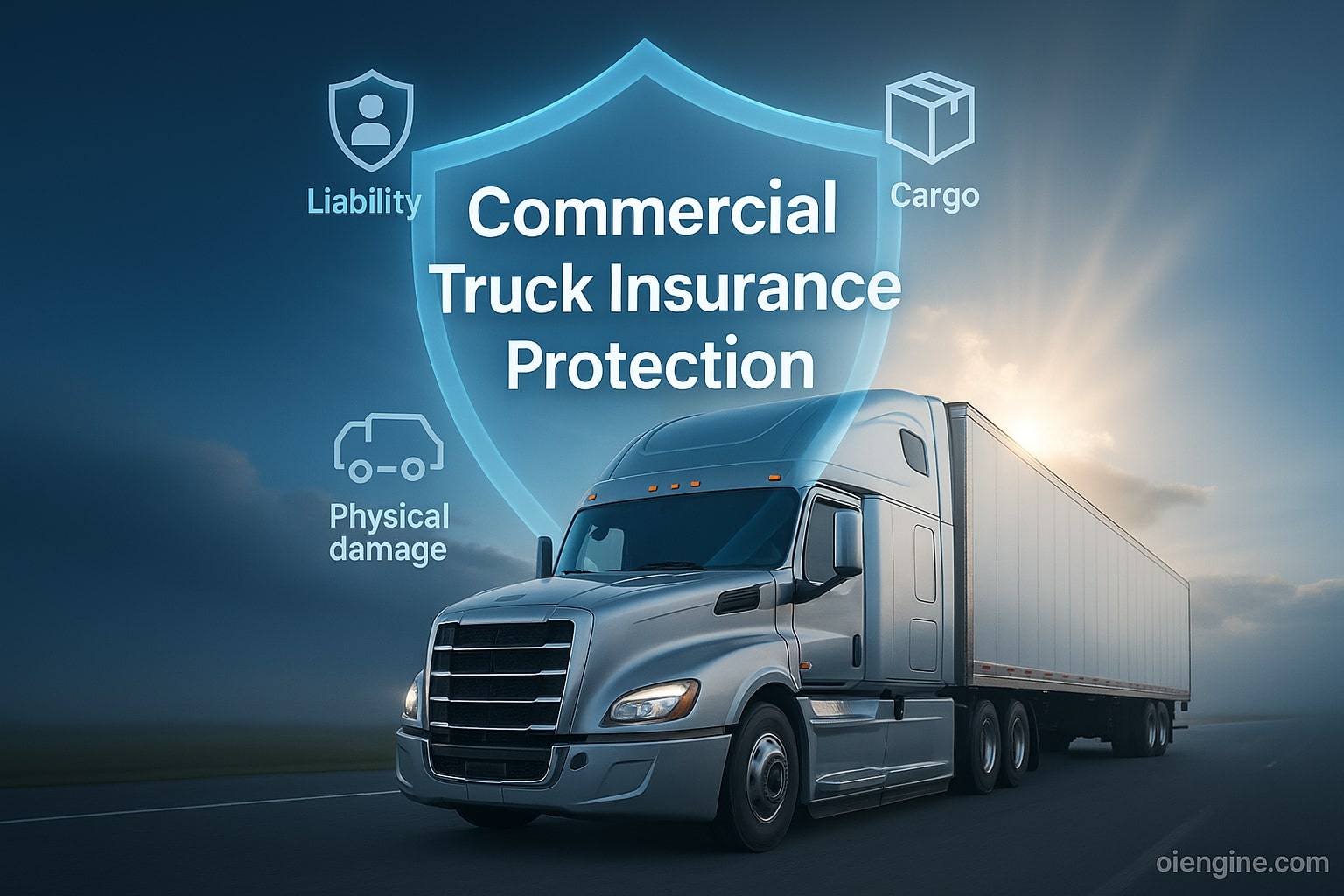
Picture this: A single trucking accident results in a $148,279 claim. Without proper commercial truck insurance, that’s money straight out of your pocket. With over 500,000 large truck accidents occurring annually in the United States, the question isn’t whether you need insurance, it’s whether you can afford not to have it.
Commercial truck insurance is essential for three critical reasons: legal compliance with federal and state regulations, financial protection against catastrophic losses, and maintaining business continuity when accidents occur. This comprehensive protection shields your trucking business from bankruptcy-level claims while ensuring you meet all regulatory requirements.
In this guide, you’ll discover the legal mandates requiring coverage, understand the true financial risks of operating uninsured, explore essential and specialized coverage types, learn cost factors and savings strategies, and gain insights for selecting the right insurance carrier. Let’s dive into why commercial truck insurance isn’t just important, it’s indispensable for your business survival.
Table of Contents
- The Legal Imperative: Why Commercial Truck Insurance is Mandatory
- Financial Protection: The True Cost of Being Uninsured
- Essential Types of Commercial Truck Insurance Coverage
- Specialized Coverage Options for Maximum Protection
- Understanding Commercial Truck Insurance Costs in 2026
- How to Reduce Your Commercial Truck Insurance Rates
- Selecting the Right Commercial Trucking Insurance Carrier
- Industry-Specific Insurance Considerations
- The Business Case: Why Insurance Strengthens Your Trucking Operation
- Common Commercial Truck Insurance Mistakes to Avoid
- Frequently Asked Questions About Commercial Truck Insurance
- Conclusion
The Legal Imperative: Why Commercial Truck Insurance is Mandatory
Federal FMCSA Requirements and Minimum Coverage Limits
The Federal Motor Carrier Safety Administration (FMCSA) mandates specific minimum insurance requirements for all commercial trucking operations. These requirements vary based on the type of cargo you transport and whether you operate across state lines. For general freight, the minimum liability coverage is $750,000, while hazardous materials can require up to $5 million in coverage.
Operating without meeting these federal requirements isn’t just risky—it’s illegal. The FMCSA actively monitors compliance through their Safety Measurement System (SMS), and violations can result in immediate shutdown orders. Your commercial truck liability insurance coverage must be filed with the FMCSA before receiving operating authority.
The American Trucking Associations reports that regulatory compliance is one of the top concerns for trucking companies, and insurance requirements form the foundation of legal operation. Without proper filings, you cannot legally transport goods across state lines or obtain your DOT number.
State-Specific Insurance Mandates and Filing Requirements
While federal requirements set the baseline, individual states often impose additional insurance mandates that can significantly impact your coverage needs. Some states require higher liability limits, especially for intrastate operations, while others mandate specific coverages like uninsured motorist protection or cargo insurance.
Each state has its own filing process and timeline for insurance verification. For example, California requires a separate MCP-65 filing for intrastate carriers, while Texas mandates Form E filing for motor carriers. These state-specific requirements can add complexity to your insurance portfolio, especially if you operate in multiple states.
Understanding these variations is crucial for maintaining compliance across your operating territories. Many trucking businesses have faced substantial fines or operational shutdowns due to overlooking state-specific requirements. Working with commercial trucking insurance carriers experienced in multi-state operations can help ensure comprehensive compliance.
DOT Number Requirements and Insurance Verification
Your Department of Transportation (DOT) number serves as your unique identifier in the trucking industry, and maintaining it requires continuous insurance compliance. The FMCSA won’t issue or maintain your DOT number without proof of active commercial truck insurance that meets all minimum requirements.
The verification process involves your insurance company filing specific forms directly with the FMCSA. These include the MCS-90 endorsement for liability coverage and potentially the MCS-82 for cargo insurance. The filing process typically takes 24-48 hours, but any lapse in coverage results in immediate DOT number deactivation.
Regular audits and roadside inspections verify your insurance status in real-time. Officers can instantly check your coverage through the FMCSA’s database, and operating with inactive or insufficient insurance leads to immediate out-of-service orders. This interconnected system makes maintaining continuous coverage essential for operational continuity.
Consequences of Operating Without Proper Insurance Coverage
The penalties for operating without adequate commercial truck insurance extend far beyond simple fines. Initial violations can result in fines ranging from $1,000 to $10,000 per occurrence, but the financial consequences multiply quickly. A single accident while uninsured can lead to personal bankruptcy and criminal charges.
Beyond immediate financial penalties, operating without insurance destroys your safety rating and can result in permanent disqualification from the trucking industry. The FMCSA maintains a public database of violations, making it impossible to hide insurance lapses from potential clients or business partners. This transparency means even a brief coverage gap can haunt your business for years.
Legal Consequences of Uninsured Operation:
- Immediate out-of-service orders
- Federal fines up to $10,000 per violation
- Criminal prosecution for serious violations
- Permanent loss of operating authority
- Personal liability for all damages and injuries
- Inability to secure future insurance coverage
Financial Protection: The True Cost of Being Uninsured
Average Accident Costs and Liability Exposure Analysis
The financial reality of trucking accidents is sobering. According to recent industry data, the average commercial truck accident involving one injury costs $148,279. However, this figure only scratches the surface of potential liability exposure. Accidents involving multiple vehicles or fatalities can easily exceed $1 million in damages.
Your liability exposure extends beyond vehicle damage and medical costs. Lost wages, pain and suffering, and punitive damages can multiply claim values exponentially. Without affordable commercial truck insurance rates protecting your assets, a single accident could wipe out decades of business profits and personal savings.
Consider this breakdown of average accident costs:
| Accident Type | Average Cost | Potential Maximum |
| Property damage only | $16,000 | $150,000 |
| Single injury | $148,279 | $500,000 |
| Multiple injuries | $375,000 | $2,000,000 |
| Fatality | $750,000 | $5,000,000+ |
Cargo Loss Statistics and Financial Impact on Trucking Businesses
Cargo loss represents another significant financial risk that many truckers underestimate. The FBI reports that cargo theft costs the transportation industry between $15-30 billion annually. Even without theft, cargo damage from accidents, weather, or equipment failure can result in substantial claims against your business.
When cargo is damaged or lost under your care, you’re legally responsible for its full value plus any consequential damages. For high-value loads like electronics or pharmaceuticals, a single incident could result in claims exceeding $500,000. Without proper motor truck cargo insurance, these losses come directly from your business accounts.
The ripple effects of cargo losses extend beyond immediate claim costs. Shippers may pursue additional damages for missed delivery deadlines, lost sales, or production delays. Your business reputation suffers, leading to lost contracts and reduced revenue. Many trucking companies have failed after a single major cargo loss without insurance protection.
Business Interruption Costs from Vehicle Downtime
When your truck is damaged in an accident, the repair costs are just the beginning of your financial exposure. Every day your vehicle sits in the shop represents lost revenue that can quickly accumulate to devastating amounts. For owner-operators averaging $1,000-1,500 daily gross revenue, a two-week repair period means $14,000-21,000 in lost income.
Beyond lost revenue, fixed costs continue accumulating during downtime. Truck payments, insurance premiums, permits, and other overhead expenses don’t pause when your vehicle is out of service. Without rental reimbursement coverage, you face the difficult choice of losing contracts or paying premium rates for replacement vehicles.
The hidden costs of downtime often surprise truckers:
- Customer relationship damage from missed deliveries
- Contract penalties for service failures
- Driver retention issues during extended downtime
- Market share loss to competitors
- Credit damage from missed payments during cash flow interruption
Legal Defense Costs and Settlement Averages
Legal defense costs in trucking accidents can bankrupt a business before a case even reaches settlement. Attorney fees for commercial vehicle accidents typically start at $300-500 per hour, with complex cases requiring hundreds of billable hours. Expert witnesses, accident reconstruction, and court fees add thousands more to defense costs.
Even if you’re not at fault, proving your innocence requires substantial legal investment. Without commercial insurance for semi trucks covering defense costs, you might be forced to accept unfavorable settlements simply because you cannot afford to fight. This financial pressure often results in settlements 50-70% higher than cases with proper legal representation.
The average settlement varies dramatically based on circumstances, but data shows concerning trends. Minor injury cases average $75,000-150,000 in settlements, while serious injuries push settlements above $500,000. Wrongful death cases routinely exceed $1 million, with some reaching $5-10 million for egregious circumstances.
Essential Types of Commercial Truck Insurance Coverage
Primary Liability Insurance: Your First Line of Defense
Primary liability insurance forms the foundation of your commercial truck insurance portfolio. This coverage protects you when your truck causes bodily injury or property damage to others. It’s not just recommended—it’s legally required by the FMCSA for all commercial trucking operations, with minimums starting at $750,000 for general freight.
This coverage responds first in accident situations, paying for medical expenses, property repairs, legal defense, and settlements up to your policy limits. However, minimum limits rarely provide adequate protection in serious accidents. Industry experts recommend carrying at least $1-2 million in primary liability to ensure comprehensive protection against catastrophic claims.
The scope of primary liability extends beyond simple traffic accidents. It covers incidents during loading and unloading, parking lot accidents, and even some environmental damages from spills. Understanding these coverage nuances helps you appreciate why this insurance is truly your first line of defense against financial ruin.
Physical Damage Coverage: Protecting Your Equipment Investment
Your commercial truck represents a significant capital investment, often exceeding $150,000 for newer models. Physical damage coverage protects this investment through two components: comprehensive coverage for non-collision events and collision coverage for accident-related damages. Together, they ensure your ability to repair or replace your vehicle after covered losses.
Comprehensive coverage protects against theft, vandalism, weather damage, and other non-collision perils. Given that trucks face exposure to severe weather, cargo theft attempts, and vandalism at truck stops, this coverage proves invaluable. Collision coverage handles damages from accidents, regardless of fault, ensuring you can quickly return to operation.
Many truckers mistakenly believe they can self-insure for physical damage, but this strategy often backfires. Consider these factors:
- Average engine rebuild: $20,000-30,000
- Transmission replacement: $4,000-8,000
- Major collision repairs: $25,000-50,000
- Total loss replacement: $80,000-180,000
Motor Truck Cargo Insurance: Safeguarding Client Shipments
Motor truck cargo insurance protects the freight you haul from damage, theft, or loss during transportation. This coverage is essential because your primary liability typically excludes cargo, leaving you personally responsible for shipment values that can exceed your truck’s worth. Many shippers require specific cargo insurance limits before offering contracts.
Coverage typically includes protection for accidents, theft, weather damage, and refrigeration breakdown for temperature-controlled loads. However, policies vary significantly in covered perils and excluded cargo types. Understanding your policy’s specific terms prevents surprise claim denials when clients seek compensation for damaged goods.
The importance of adequate cargo insurance becomes clear when examining occupational accident statistics. Cargo claims can arise from seemingly minor incidents—sudden stops causing load shifts, temperature fluctuations spoiling perishables, or water damage from small roof leaks. Without proper coverage, these claims directly impact your bottom line.
Non-Trucking Liability: Coverage Beyond Business Operations
Non-trucking liability insurance, also known as bobtail insurance when driving without a trailer, fills a critical coverage gap for many truckers. This protection applies when using your commercial vehicle for personal purposes or when not under dispatch. Standard commercial policies often exclude these situations, leaving dangerous coverage gaps.
For owner-operators leased to motor carriers, this coverage is particularly crucial. While the motor carrier’s insurance covers you during dispatch, any personal use—grocery shopping, driving home, or personal errands—falls outside their coverage. One accident during these times could expose your personal assets without non-trucking liability protection.
The best insurance for commercial trucks includes non-trucking liability to ensure continuous protection. Coverage typically costs a fraction of primary liability while providing peace of mind during non-business use. This affordable addition prevents coverage disputes and ensures protection regardless of your driving purpose.
Specialized Coverage Options for Maximum Protection
Bobtail and Trailer Interchange Insurance Explained
Bobtail insurance specifically covers your truck when operating without a trailer attached for business purposes. This differs from non-trucking liability, which covers personal use. Bobtail situations occur frequently—returning from deliveries, heading to pick up loads, or repositioning equipment—making this coverage essential for comprehensive protection.
Trailer interchange insurance protects non-owned trailers under your control through written interchange agreements. In today’s trucking industry, hauling other companies’ trailers is common practice, but this creates liability exposure. If a borrowed trailer is damaged while in your possession, you’re financially responsible without proper coverage.
These specialized coverages address specific industry practices:
When Bobtail Coverage Applies:
- Driving to pick up a loaded trailer
- Returning after trailer delivery
- Moving between terminals
- Positioning for maintenance
Trailer Interchange Benefits:
- Covers physical damage to non-owned trailers
- Protects against liability claims
- Enables flexible operations
- Satisfies interchange agreement requirements
General Liability Coverage for Non-Driving Business Risks
While vehicle-related insurance is crucial, general liability coverage protects against business risks beyond driving. This coverage responds to claims arising from your business operations but not directly involving vehicle operation. For trucking companies, these risks are more common than many realize.
General liability covers incidents like customers slipping at your facility, damage caused during loading/unloading operations, or errors in freight handling that don’t involve vehicle accidents. It also provides protection against advertising injuries and some contractual liabilities. This broader protection ensures comprehensive business coverage.
Real-world examples highlight this coverage’s importance. A client visiting your office slips on wet floors, resulting in injury claims. During loading, your equipment damages a customer’s dock. A mislabeled shipment causes customer losses. These scenarios fall outside auto coverage but could still result in significant claims against your business.
Rental Reimbursement and Downtime Protection
Rental reimbursement with downtime coverage addresses the harsh financial reality of vehicle repairs. When accidents or breakdowns sideline your truck, this coverage helps maintain cash flow by covering replacement vehicle costs or compensating for lost income. For businesses operating on thin margins, this protection can mean the difference between survival and closure.
This coverage typically offers two benefit options: actual rental costs for replacement vehicles or daily income replacement during repairs. Some policies combine both benefits, providing maximum flexibility during claim situations. Coverage limits and waiting periods vary, so understanding your policy specifics ensures adequate protection.
The value becomes apparent when examining repair timelines. Major collision repairs average 3-4 weeks, while parts availability can extend mechanical repairs even longer. Without coverage, you face impossible choices: pay premium rental rates, lose contracts, or rush inadequate repairs.
Uninsured/Underinsured Motorist Coverage Importance
Despite legal requirements, many drivers operate without adequate insurance. The Insurance Research Council estimates 13% of motorists are completely uninsured, with many more carrying only state minimums. When these drivers cause accidents with your commercial truck, uninsured/underinsured motorist coverage protects your interests.
This coverage fills the gap when at-fault parties cannot fully compensate your losses. It covers medical expenses, lost wages, and sometimes vehicle damage when the responsible party lacks sufficient insurance. For truckers facing extended recovery periods after accidents, this protection prevents financial devastation from others’ irresponsibility.
The commercial truck liability insurance cost for this coverage is minimal compared to potential benefits. Consider that state minimum auto insurance might be just $25,000, while your medical costs from a serious accident could exceed $250,000. This coverage ensures you receive fair compensation regardless of the at-fault party’s insurance status.
Understanding Commercial Truck Insurance Costs in 2026
Key Factors That Determine Your Insurance Premiums
Insurance companies evaluate numerous factors when determining your commercial truck insurance premiums. Your driving history carries the most weight, with clean records earning substantially lower rates than those with violations or claims. Even minor infractions can increase premiums by 20-30%, while serious violations might double your costs.
Vehicle specifications significantly impact cheap commercial trucking insurance availability. Newer trucks with advanced safety features qualify for better rates, while older vehicles face higher premiums due to increased breakdown risks. Your truck’s weight, value, and intended use all factor into premium calculations, with heavier trucks and specialized equipment commanding higher rates.
Operational factors also influence costs:
| Factor | Impact on Premium | Typical Range |
| Operating radius | Local < Regional < Long-haul | 15-40% variance |
| Cargo type | General freight < Hazmat | 25-100% increase |
| Annual mileage | Higher miles = Higher risk | $0.10-0.15 per mile |
| Driver experience | 2+ years CDL preferred | 10-25% discount |
| Safety record | CSA scores affect rates | Up to 50% impact |
Average Monthly Costs by Trucking Business Type
Commercial trucking insurance costs vary dramatically based on your operation type. According to industry data, Progressive’s 2026 national averages range from $746 monthly for specialty truckers to $954 for transportation truckers. However, these averages mask significant variations based on specific business characteristics.
Owner-operators typically pay $850-1,200 monthly for basic coverage, while small fleet operations might see $600-900 per truck with volume discounts. Specialized operations face different cost structures—hazmat haulers might pay $1,500-2,500 monthly, while local delivery services could secure coverage for $400-700 per vehicle.
New ventures face the highest cheap commercial freight insurance challenges. Without established safety records or business history, new trucking companies often pay 30-50% above average rates during their first year. Building a positive loss history and implementing safety programs can significantly reduce these costs over time.
Hidden Costs of Inadequate Coverage
While shopping for affordable commercial truck insurance rates tempts many to select minimum coverage, this strategy often backfires spectacularly. Inadequate coverage creates hidden costs that dwarf any premium savings. Gap areas in coverage lead to out-of-pocket expenses that can cripple your business during claims.
Underinsurance penalties represent one hidden cost many truckers discover too late. When policy limits prove insufficient for claims, you become personally liable for the difference. This exposure extends to your personal assets—homes, savings, and future earnings face risk. Additionally, inadequate coverage often results in higher future premiums as insurers view you as a higher risk.
Hidden costs include:
- Deductible stacking on multiple coverages
- Coverage gaps requiring self-funding
- Legal fees exceeding policy limits
- Lost business during claim disputes
- Credit damage from claim-related financial stress
- Higher retention requirements from shippers
ROI Analysis: Insurance Investment vs. Potential Losses
Viewing insurance as an investment rather than an expense transforms your perspective on coverage decisions. Comprehensive commercial truck insurance typically costs 3-5% of gross revenue, while a single uninsured accident can consume 50-100% of annual profits. This stark mathematics makes the ROI calculation clear.
Consider a typical owner-operator grossing $150,000 annually. Comprehensive insurance might cost $12,000-15,000 yearly, representing 8-10% of gross revenue. However, one serious accident could result in $500,000+ in liabilities. Without insurance, this scenario means bankruptcy. With coverage, operations continue with minimal disruption.
The investment value extends beyond catastrophic loss prevention. Proper insurance enables higher-paying contracts, as many shippers require specific coverage levels. It provides peace of mind, allowing focus on business growth rather than risk worry. Access to better business resources becomes possible when insurance concerns are properly addressed.
How to Reduce Your Commercial Truck Insurance Rates
Safety Programs and Driver Training Discounts
Implementing formal safety programs dramatically reduces your commercial truck insurance costs. Insurance companies offer substantial discounts—often 10-25%—for businesses maintaining documented safety protocols. These programs demonstrate your commitment to risk reduction, making you a more attractive insurance candidate.
Effective safety programs include regular driver meetings, documented training sessions, and clear accident prevention policies. Monthly safety meetings addressing specific risks, seasonal hazards, and industry best practices show insurers you’re proactively managing risks. Written policies for vehicle inspection, load securement, and hours-of-service compliance further strengthen your safety profile.
Driver training investments pay multiple dividends. Beyond insurance discounts, trained drivers have fewer accidents, reduce equipment wear, and improve fuel efficiency. Many commercial trucking insurance carriers offer free or discounted training resources, making this improvement accessible regardless of business size.
Technology Solutions: ELDs and Telematics Savings
Electronic Logging Devices (ELDs) and telematics systems offer substantial insurance savings opportunities. Progressive’s Smart Haul program, for example, saves participating truckers an average of $1,056 annually by sharing ELD data. This technology-based discount rewards safe driving behaviors with immediate premium reductions.
Telematics systems monitor driving behaviors like hard braking, rapid acceleration, and speed patterns. This data helps identify risky behaviors before they cause accidents, while demonstrating your safety commitment to insurers. Many systems include coaching features, helping drivers improve their habits and qualify for better rates.
Advanced safety technologies qualifying for discounts include:
- Forward collision warnings
- Automatic emergency braking
- Lane departure warnings
- Blind spot detection
- Dashboard cameras
- GPS tracking systems
Multi-Policy Bundling Strategies
Bundling multiple insurance policies with one carrier typically generates 10-20% discounts across all coverages. This strategy works particularly well for trucking businesses needing general liability, cargo, and commercial auto coverages. Single-carrier relationships also simplify claims handling and policy management.
Beyond simple premium discounts, bundling creates relationship advantages. Insurers value larger accounts more highly, often providing dedicated service teams and priority claims handling. This enhanced service proves invaluable during critical situations, justifying slightly higher individual coverage costs for superior overall value.
Strategic bundling extends beyond trucking-specific coverages. Consider combining business property, workers’ compensation, and even personal policies with your commercial carrier. Some insurers offer package policies specifically designed for trucking operations, providing comprehensive coverage with built-in discounts.
Choosing the Right Deductibles and Coverage Limits
Deductible selection significantly impacts your commercial insurance for semi trucks costs. Higher deductibles reduce premiums but increase out-of-pocket costs during claims. The key lies in balancing premium savings against your financial capacity to handle deductibles. Most truckers find $1,000-2,500 deductibles optimal.
Coverage limit decisions require careful analysis. While state minimums might seem adequate, they rarely provide sufficient protection. Industry experts recommend liability limits at least double the minimum requirements. This additional coverage typically costs far less than proportional coverage increases—doubling limits might only increase premiums 25-40%.
Consider this deductible impact analysis:
| Coverage Type | $500 Deductible | $1,000 Deductible | $2,500 Deductible |
| Physical Damage | $450/month | $380/month | $290/month |
| Annual Savings | Baseline | $840 | $1,920 |
| Break-even Claims | N/A | 1.7 years | 1.3 years |
Selecting the Right Commercial Trucking Insurance Carrier
Evaluating Insurance Company Financial Strength
Financial stability should be your primary consideration when selecting among commercial trucking insurance carriers. An insurer’s financial strength determines their ability to pay claims, especially during economic downturns or after catastrophic events. A.M. Best ratings provide objective assessments, with A+ or better ratings indicating superior financial stability.
Beyond ratings, examine the insurer’s trucking industry experience and claim payment history. Companies specializing in commercial trucking understand unique industry risks and typically offer more comprehensive coverage options. Look for insurers with dedicated trucking divisions and specialized claim handlers who understand commercial vehicle accidents.
Market share and longevity also indicate reliability. Companies like Progressive (50+ years in trucking) and GEICO (85+ years overall) demonstrate staying power. However, don’t dismiss newer specialists who might offer innovative coverage options or better service. Balance stability with innovation when making your selection.
Comparing Coverage Options Across Major Carriers
Not all commercial truck insurance policies are created equal. While core coverages might appear similar, policy details vary significantly between carriers. Some insurers include valuable endorsements standard, while others charge extra for basic protections. Understanding these differences prevents surprise coverage gaps during claims.
Progressive Commercial offers specific advantages like heavy truck roadside assistance and Smart Haul technology discounts. GEICO provides military discounts and extensive filing services. Smaller regional carriers might offer personalized service and local claim handling advantages. Each carrier’s strengths align differently with various business needs.
Key comparison factors:
- Coverage breadth and exclusions
- Available endorsements and costs
- Claim handling reputation
- Discount programs offered
- Technology integration options
- Payment plan flexibility
- Filing service efficiency
Understanding Claims Process and Support Services
The true test of any insurance carrier comes during claim situations. Before selecting a carrier, investigate their claims process thoroughly. Look for 24/7 claim reporting, dedicated commercial adjusters, and transparent communication systems. Poor claim handling can devastate your business even with adequate coverage.
Premier carriers offer specialized support services beyond basic claim handling. Heavy truck repair networks ensure quality repairs at fair prices. Rental assistance programs provide quick replacement vehicles. Some carriers offer business interruption support, helping maintain customer relationships during vehicle downtime.
Research online reviews and industry forums for real-world claim experiences. Pay attention to claim resolution timeframes, adjuster expertise, and payment reliability. The best insurance for commercial trucks comes from carriers consistently delivering when you need them most.
Red Flags to Avoid When Choosing an Insurer
Several warning signs indicate potentially problematic insurance carriers. Extremely low quotes often signal coverage gaps or financial instability. If a quote seems too good to be true, scrutinize policy language for unusual exclusions or limitations. Legitimate insurers price competitively but fairly.
Avoid carriers lacking proper authorization in your operating states. Verify licensing through state insurance departments before purchasing coverage. Unlicensed insurers cannot legally defend you in court or guarantee claim payments. Additionally, avoid carriers with excessive complaint ratios or recent financial downgrades.
Insurance carrier red flags:
- Quotes 40%+ below market average
- Reluctance to provide written quotes
- Pressure for immediate decisions
- Unclear policy language
- No dedicated trucking expertise
- Poor BBB ratings or excessive complaints
- Recent ownership changes or financial issues
Industry-Specific Insurance Considerations
Owner-Operators vs. Fleet Insurance Requirements
Owner-operators face unique insurance challenges compared to fleet operations. As independent contractors, owner-operators must secure their own primary liability, physical damage, and cargo coverage. When leased to motor carriers, coordination between personal and carrier coverage becomes critical to avoid gaps.
Fleet operations benefit from volume discounts and unified coverage strategies. However, they face complex driver management and higher aggregate exposures. Fleet policies must address hired and non-owned auto exposures, larger liability limits, and sophisticated loss control requirements. Administrative efficiency becomes paramount with multiple vehicles.
The distinction impacts coverage decisions significantly. Owner-operators prioritize affordable personal protection and flexibility for changing carrier relationships. Fleets focus on comprehensive corporate protection and standardized coverage across all operations. Understanding your position in this spectrum guides appropriate coverage selection.
Specialized Coverage for Hazmat and High-Value Cargo
Transporting hazardous materials or high-value cargo dramatically alters insurance requirements. Hazmat operations face federal mandates for $5 million minimum liability coverage, compared to $750,000 for general freight. This increased requirement reflects the catastrophic potential of hazmat incidents, including environmental cleanup costs.
High-value cargo presents different challenges. Electronics, pharmaceuticals, and other targeted commodities face elevated theft risks. Standard cargo insurance often includes limitations for these goods, requiring specific endorsements or separate policies. Security requirements, route restrictions, and storage limitations commonly apply.
Specialized operations should expect:
- Premium increases of 50-200% over standard coverage
- Stricter underwriting requirements
- Mandatory safety protocols
- Higher deductibles
- Coverage restrictions and exclusions
- Enhanced reporting requirements
Interstate vs. Intrastate Operation Insurance Differences
Interstate operations crossing state lines face federal FMCSA requirements and multi-state filing obligations. This complexity increases administrative burden but provides standardized coverage expectations. Federal requirements ensure consistent minimum protection regardless of individual state variations.
Intrastate operations within single states might face lower insurance requirements but encounter state-specific coverage mandates. Some states require additional coverages like uninsured motorist protection or higher liability limits for certain commodities. Understanding your state’s specific requirements prevents compliance failures.
The operational scope also impacts carrier selection. National insurers excel at interstate filing requirements and multi-state claim handling. Regional carriers might offer advantages for intrastate operations through local expertise and relationships. Matching carrier capabilities to operational needs optimizes both coverage and service.
Private Carrier Insurance Needs
Private carriers hauling their own goods face different insurance considerations than for-hire operations. While exempt from many FMCSA insurance filing requirements, private carriers still need comprehensive protection. The absence of federal mandates doesn’t diminish actual risk exposure.
Primary liability remains essential, protecting against third-party claims from accidents. Physical damage coverage protects vehicle investments. However, cargo insurance needs differ—you’re insuring your own goods rather than customer property. This ownership difference impacts coverage structure and claim handling.
Many private carriers mistakenly believe personal commercial policies provide adequate protection. However, the trucking industry’s unique risks require specialized coverage. Standard commercial auto policies often exclude specific trucking exposures, creating dangerous gaps for private carriers.
The Business Case: Why Insurance Strengthens Your Trucking Operation
Building Client Trust Through Proper Insurance Coverage
Comprehensive insurance coverage serves as a powerful business development tool. Shippers increasingly require proof of specific coverage levels before considering carriers. Your ability to quickly provide certificates of insurance demonstrating robust protection often determines contract awards. This competitive advantage grows more important as shippers face their own liability concerns.
Professional insurance presentation demonstrates business sophistication. Clients interpret proper coverage as evidence of financial stability and operational maturity. Conversely, minimal coverage or reluctance to provide insurance information raises red flags about business practices. First impressions matter, and insurance documentation often creates that impression.
Major shippers often require:
- $1-2 million minimum liability
- $100,000+ cargo coverage
- Additional insured endorsements
- Waiver of subrogation agreements
- Specific filing confirmations
Competitive Advantages of Comprehensive Protection
Beyond meeting minimum requirements, comprehensive coverage creates distinct competitive advantages. Higher liability limits qualify you for premium contracts unavailable to minimally insured competitors. Specialized coverages like refrigeration breakdown or high-value cargo insurance open lucrative market segments.
Insurance strength enables business growth through enhanced financing options. Lenders view properly insured operations more favorably, offering better terms for equipment purchases. Leasing companies require specific coverage levels, and superior insurance profiles negotiate better rates. This financial flexibility accelerates business expansion.
Comprehensive coverage also improves vendor relationships. Parts suppliers, maintenance facilities, and fuel vendors extend better credit terms to properly insured customers. They recognize reduced payment risk from businesses protected against catastrophic losses. These improved terms enhance cash flow and operational efficiency.
Insurance as a Business Growth Enabler
Strategic insurance planning facilitates business expansion into new markets and services. Adding refrigerated transport, oversized loads, or hazmat capabilities requires specialized coverage. Having relationships with capable commercial trucking insurance carriers streamlines these transitions, preventing coverage gaps during growth phases.
Insurance capacity directly impacts growth potential. Carriers impose aggregate limits affecting fleet size and operational scope. Building strong insurer relationships early ensures adequate capacity for expansion. Starting with appropriate carriers prevents disruptive changes during critical growth periods.
Growth-oriented coverage strategies include:
- Scalable policy structures
- Blanket additional insured capabilities
- Flexible vehicle addition processes
- Territory expansion provisions
- New driver onboarding protocols
Case Studies: Businesses Saved by Proper Coverage
Real-world examples powerfully illustrate insurance value. Consider ABC Trucking, an owner-operator who invested in $2 million liability coverage despite only requiring $750,000. When involvement in a multi-vehicle accident resulted in $1.5 million in claims, the additional coverage prevented personal bankruptcy and business closure.
XYZ Transport’s experience with cargo insurance proves equally instructive. Their refrigeration unit failed, spoiling a $200,000 pharmaceutical shipment. Comprehensive cargo coverage including refrigeration breakdown paid the claim entirely. Without this protection, the loss would have exceeded their annual profit, forcing closure.
Regional carrier DEF Logistics survived a coordinated theft ring targeting their trucks. Over six months, thieves stole three trucks and valuable cargo. Comprehensive physical damage and cargo coverage replaced equipment and compensated customers. The company continued operating, eventually helping authorities apprehend the theft ring.
Common Commercial Truck Insurance Mistakes to Avoid
Pro Tip: Top 5 Coverage Gaps That Cost Truckers Thousands
- Underestimating liability limits – Minimum coverage rarely protects adequately
- Skipping cargo insurance – Personal liability for damaged goods
- Ignoring non-trucking liability – Gaps during personal use
- Inadequate physical damage limits – Actual cash value vs. replacement cost
- Missing endorsements – Refrigeration breakdown, earned freight, debris removal
Coverage Comparison Table
| Coverage Type | State Minimum | Industry Recommended | Premium Difference |
| Primary Liability | $750,000 | $2,000,000 | +$150-250/month |
| Physical Damage | Optional | Full Coverage | $350-500/month |
| Cargo Insurance | None | $100,000+ | $100-200/month |
| Non-Trucking | None | $1,000,000 | $40-60/month |
| Uninsured Motorist | Varies | $1,000,000 | $25-40/month |
Annual Insurance Review Checklist
✓ Verify all vehicles listed correctly
✓ Update driver information and MVRs
✓ Review liability limits for adequacy
✓ Confirm cargo coverage matches contracts
✓ Check deductibles remain appropriate
✓ Evaluate new available discounts
✓ Compare market rates
✓ Update business operations description
✓ Review and update named insureds
✓ Verify filing compliance
Frequently Asked Questions About Commercial Truck Insurance
How Quickly Can I Get Commercial Truck Insurance Coverage?
Most commercial trucking insurance carriers can provide coverage within 24-48 hours for standard risks. Simple owner-operator policies might even receive same-day binding. However, complex operations, poor driving records, or specialized cargo might require additional underwriting time. Having complete information ready accelerates the process significantly.
The key to quick coverage lies in preparation. Gather driver records, vehicle information, and operational details before contacting insurers. Electronic applications and document submission speed processing. Some carriers offer instant online quotes for basic coverage, though personalized consultation often yields better coverage and rates.
Does Commercial Truck Insurance Cover Personal Use?
Coverage during personal use depends on your specific policy structure. Owner-operators with their own authority typically receive coverage for all vehicle use under their commercial policy. However, those leased to motor carriers often have coverage gaps during personal use, requiring non-trucking liability insurance for protection.
Understanding your coverage scope prevents claim denials. Review policy language carefully, as “personal use” definitions vary between carriers. Some exclude any trip that could potentially generate revenue, while others focus on actual dispatch status. When in doubt, purchase non-trucking liability for complete protection.
What’s the Difference Between Bobtail and Non-Trucking Liability?
While often confused, these coverages protect different situations. Bobtail insurance covers driving without a trailer for business purposes—deadheading between loads or returning from deliveries. Non-trucking liability covers personal use regardless of trailer status. Some policies combine both coverages, while others require separate purchases.
The distinction matters during claims. Using your truck to move personal belongings would fall under non-trucking liability, not bobtail coverage. Driving to position for your next load would require bobtail coverage. Understanding these nuances ensures appropriate coverage selection and claim success.
How Long Do Insurance Filings Take to Process?
Standard insurance filings typically complete within 24-48 hours of policy binding. Federal FMCSA filings process electronically, often updating within hours. State filings might take longer, especially for manual processing states. Expedited filing services are available for urgent needs, though additional fees might apply.
Filing delays can impact operations, so plan accordingly. New venture applications should initiate insurance processes early. Allow extra time during busy seasons when filing volumes increase. Maintain continuous coverage to avoid filing cancellations, which require complete resubmission.
Can I Get Insurance With Past Accidents on My Record?
Past accidents don’t automatically disqualify you from coverage, though they impact rates and carrier options. Most insurers examine the past 3-5 years of driving history. Single minor accidents rarely prevent coverage, while patterns of incidents or severe accidents create challenges. High-risk specialists provide options when standard markets decline coverage.
Improving your insurance profile after accidents requires patience and strategic planning. Complete any required safety training, maintain current coverage without gaps, and document safety improvements. Each claim-free year improves your profile. Some carriers offer accident forgiveness programs, protecting rates after first incidents.
Conclusion
Commercial truck insurance isn’t just another business expense—it’s the foundation that allows your trucking operation to thrive in an inherently risky industry. From meeting federal FMCSA requirements to protecting against catastrophic financial losses, proper coverage ensures your business survives unexpected events that regularly destroy unprotected operations.
The investment in comprehensive coverage pays dividends through client trust, operational flexibility, and financial security. While cheap commercial trucking insurance might seem attractive, the hidden costs of inadequate coverage far exceed any premium savings. Smart operators view insurance as a business enabler, not a burden.
Your next step is clear: obtain quotes from multiple commercial trucking insurance carriers to find optimal coverage at competitive rates. Compare not just prices but coverage breadth, carrier stability, and service quality. The right insurance partner protects your business today while supporting your growth tomorrow. Don’t wait for an accident to discover your coverage gaps—act now to secure your trucking business’s future.